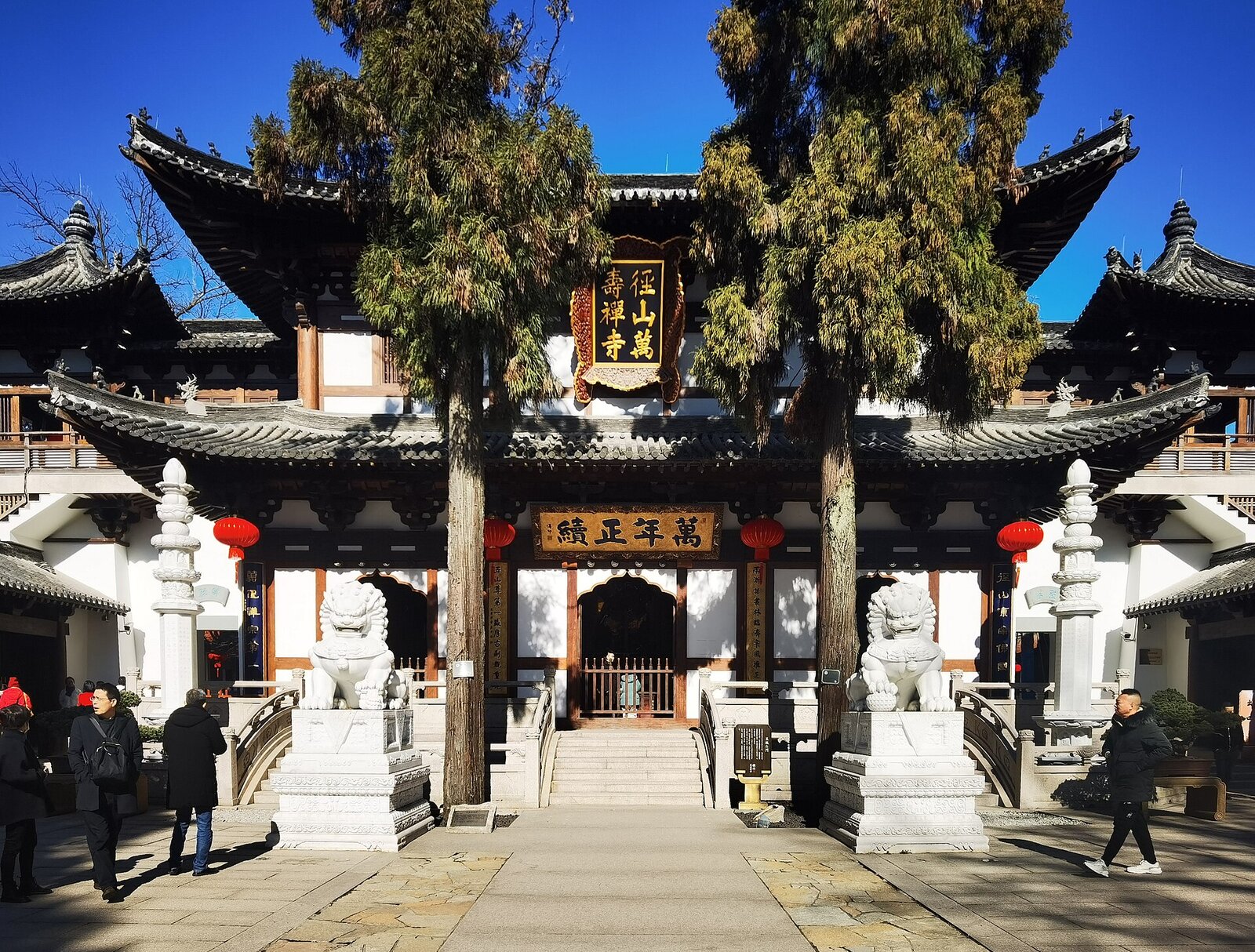
China holds nearly two millennia of Buddhist art and practice in dialogue with landscape: Han Chinese Chan (Zen) courtyards along river basins, and Tibetan Vajrayana centers on the roof of the world. This primer maps sacred geography the way our PDF library does — then anchors what we actually field today through China History 101 weeks in Hangzhou and Beijing and a high-plateau gateway in Shangri-La. Where the itinerary belongs to permits, seasons, or bespoke planning, we say so plainly.
Editor's picks
Five threads to pull
- Tea is liturgy. Jingshan is not only architecture — it is where Zen and leaf became a single ceremony that later crossed the sea to Japan.
- Hangzhou pairs forest and metropolis. Lingyin's grottoes reward slow looking; budget unhurried mornings before traffic returns.
- Shanghai contrasts teach scale. Jing'an's golden hall beside glass towers shows how old institutions absorb modern noise.
- Yunnan is the gentlest Tibetan preview. Songzanlin in Shangri-La delivers iconography and altitude without Lhasa logistics on day one.
- Tibet and eastern Tibet demand honesty. Potala, Tashilhunpo, and Larung Gar belong on serious life lists — execution is permits, fitness, and timing, not a rushed add-on.
A tapestry of Buddhist China
Beyond postcard Buddhas, China stacks schools and geographies: Chan meditation blended with Confucian courtesy and Daoist landscape taste in the east; in the west, tantric lineages, thangka workshops, and monastic cities pressed against summits. Travelers who slow down read courtyards as essays in wood and tile — and listen for when a site asks for silence rather than a selfie.
Part 1 汉传与禅苑
Han Buddhism — Zen heartlands & urban sanctuaries
Eastern and central China nurtured schools that became Zen in Japan and influenced Korean Seon. Temples either fold into bamboo ridges or hold their ground amid neon — same ritual clock, different decibel.
Jingshan Temple — Mount Jingshan, Hangzhou
Rising on Mount Jingshan, this monastery was counted among the "Five Mountains of Zen" during the Song; monks like Eisai studied here before transplanting tea discipline to Japan. Walk slowly: stairways, tea plots, and lecture halls still choreograph monastic time. Field week that threads West Lake culture with monastic depth: China History 101 — Hangzhou (5 days).
Lingyin Temple — Feilai Feng and grotto time
West of the lake, Lingyin ("Temple of the Soul's Retreat") layers grotto reliefs, pagoda courts, and incense corridors across seventeen centuries. Give yourself permission to linger at Feilai Feng before the tour buses peak — the same Hangzhou week spaces art history across multiple mornings.
Jing'an Temple — Shanghai's golden courtyard
In one of Asia's densest districts, rebuilt Tang-era lineage meets sky-bar altitude outside the gates. Modest dress and calm cameras keep visits welcome. DeepDive does not yet run a stand-alone Shanghai temple SKU; pair Hangzhou's monastic days with a custom Shanghai extension when your dates allow.
Part 2 藏地与高原
Tibetan Buddhism — altitude, iconography, discipline
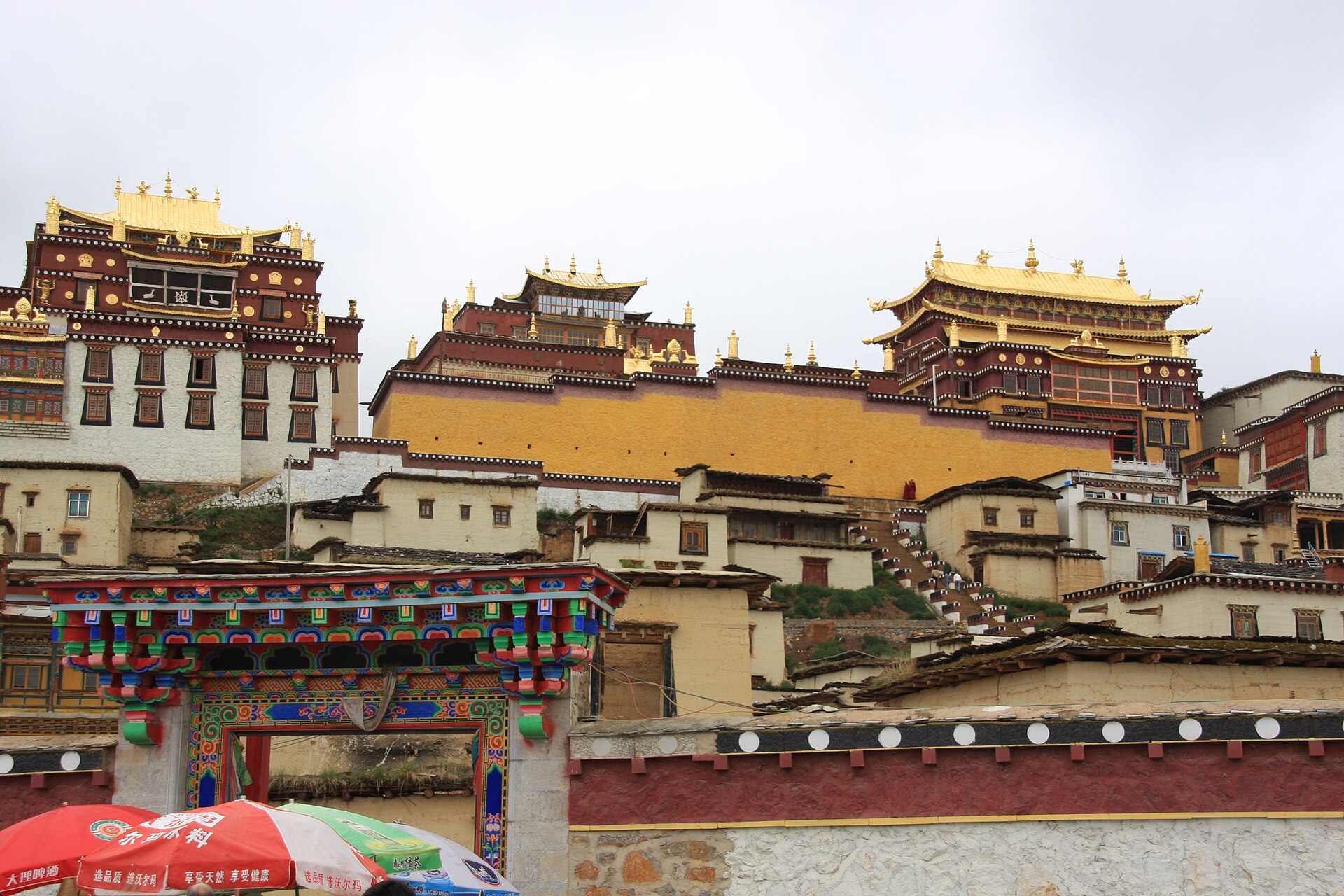
On the plateau, practice tightens around lamas, mandala logic, and long ritual hours. Colors intensify; oxygen thins. Respect means clockwise circuits, restrained photography in chapels, and patience with road and checkpoint reality.
Ganden Sumtseling — Shangri-La's "Little Potala"
Seventeenth-century foundations, gilt roofs, and assembly halls introduce Gelug tradition without Lhasa's full permit stack for first-time plateau visitors. Our runnable corridor: China's Mountains 201 — Shangri-La (5 days).
Larung Gar — Sertar's valley of study
Tens of thousands of practitioners once honeycombed these slopes above 4,000 metres — a vivid lesson in communal scholarship. Access and filming rules shift with policy seasons; treat updates as mandatory, not optional, before planning.
Potala Palace — Lhasa
UNESCO-listed tiers of white and red palaces anchor Tibetan imagination. Tickets, stairs, and altitude punish rushed agendas; serious visits assume acclimatization and guided cultural framing.
Tashilhunpo — Shigatse
Seat of successive Panchen Lamas, with vast Maitreya chapels and bronze rivers of butter-lamp light. Often paired with Lhasa for travelers already cleared for the autonomous region.
Part 3 如何启程
Match depth to fitness and paperwork
Beginner focus — Han corridors in manageable cities: Hangzhou's Zen tea roots and Lingyin's sculpture galleries, plus Beijing's imperial-and-temple rhythm when you want north-China context. Hangzhou · Beijing.
Intermediate plateau preview — Shangri-La introduces Tibetan architecture and altitude discipline inside Yunnan before you commit to autonomous-region logistics.
Advanced Tibetan circuits — Lhasa, Shigatse, eastern Tibet academies: plan with licensed partners, medical clearance, and seasonal realism; these are not generic catalog toggles.
Library cross-reads
Same rule: depth over checklist
Pair this primer with our Chinese History introduction for dynastic context and with China's mountains primer for ridgelines that hold half the temples you came to see.
FAQ
Quick answers
- Han vs Tibetan Buddhism? Broadly, Han lineages foreground Chan insight and Pure Land devotion integrated with Chinese ethics; Tibetan Vajrayana foregrounds tantric ritual, guru lineages, and pantheons mingling with older Bon echoes.
- Must I be Buddhist? No — come for art, ethics, architecture, and living culture; follow monastic cues on where to step and when to whisper.
- What should I wear? Covered shoulders and knees; layers in Tibetan zones; sturdy shoes everywhere.
- Meditation or tea? Depends on site and leader; ask your field team what is appropriate for that week's permissions.
- Sensitive regions? We route through licensed operators, brief etiquette, and handle permits we can lawfully obtain — no performative "authenticity."
References
- Our China Story. China's Jingshan Temple & Japanese tea culture. ourchinastory.com
- The China Journey. Lingyin Temple travel guide. thechinajourney.com
- Meet in Shanghai. How Jing'an Temple evolved into an international cultural exchange center of Buddhism. meet-in-shanghai.net
- China Highlights. Songzanlin (Ganden Sumtseling) Monastery. chinahighlights.com
- UNESCO World Heritage Centre. Potala Palace, Lhasa. whc.unesco.org
- China Highlights. Tashilhunpo Monastery. chinahighlights.com