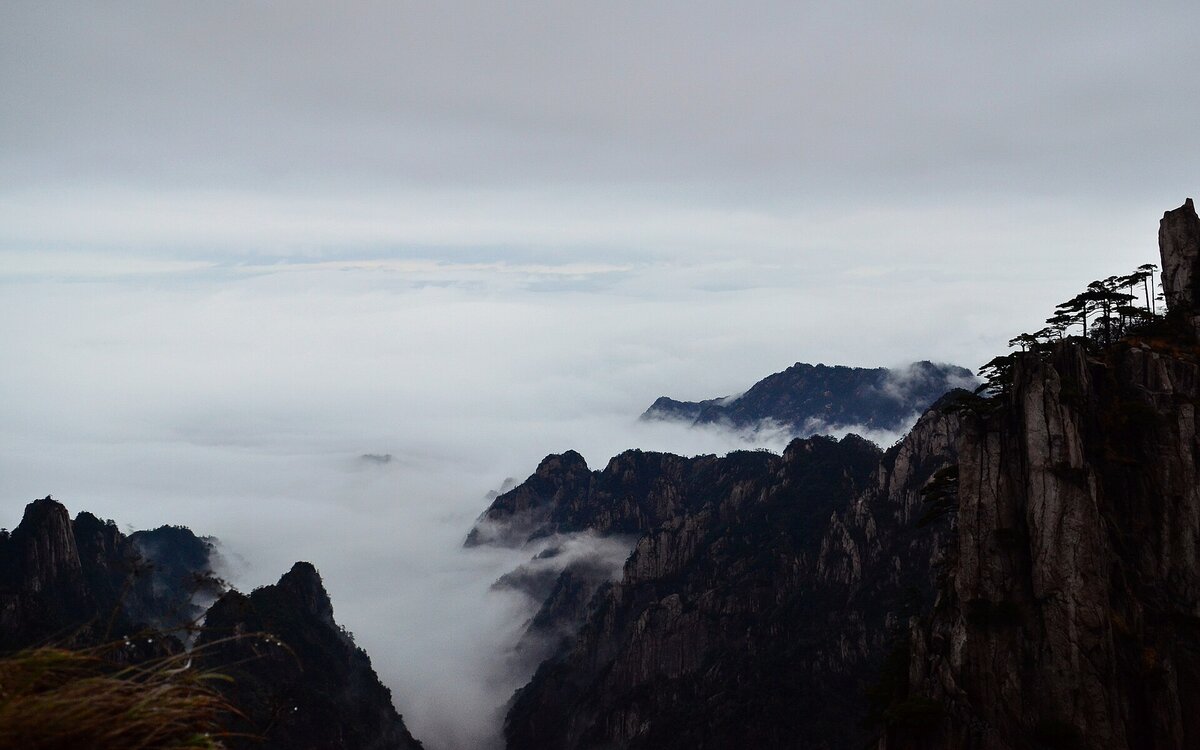
Imagine a country where ridgelines carry imperial memory, mist reads like ink wash, and every switchback can lead to a temple, a tea stall, or a view painters still try to copy. Welcome to China's mountains — not only geology, but living cultural space. For hikers and thoughtful travelers, they offer a tiered path from postcard karst to high-plateau pilgrimage, always with stories older than the trails.
Editor's picks · from Eddie
Four ways to read China's mountains
- Think in layers. Peaks here are rarely "empty wilderness" — they hold cosmology, poetry, and pilgrimage. The more you know the stories, the more the stone speaks.
- Match grade to reward. Start with well-serviced classics (karst, Huangshan), then add altitude and exposure only when your legs and lungs are ready.
- Go vertical on purpose. One focused mountain week beats a blur of airports. Depth is how you feel the scale without burning out.
- Use expert field leaders. Logistics, safety, and cultural context in remote ranges are not DIY extras — they change what you are allowed to see and understand.
China: where mountains tell ancient tales
China's ranges are a hinge between natural spectacle and human time. Limestone towers rise from rice flats; granite massifs catch seas of cloud; sacred peaks host monasteries and imperial rites alike. Western travelers often arrive for the views and stay for the narrative — emperors, monks, caravans, and local peoples who still live in the mountain's shadow.
This primer follows a tiered path: accessible iconic treks first, then richer alpine and ethnic landscapes, then the thin air and long approaches of the high country. Along the way, we link to China's Mountains 101 weeks (field-learning introductions) and China's Mountains 201 routes (advanced trails — booked as a pair minimum). Where the PDF looked ahead to Zhangjiajie or Everest country, we keep the geography honest: come for what we run today, and plan the rest with our team when you are ready.
Part 1 入门 · Iconic peaks
Iconic peaks & cultural treks — beginner-friendly classics
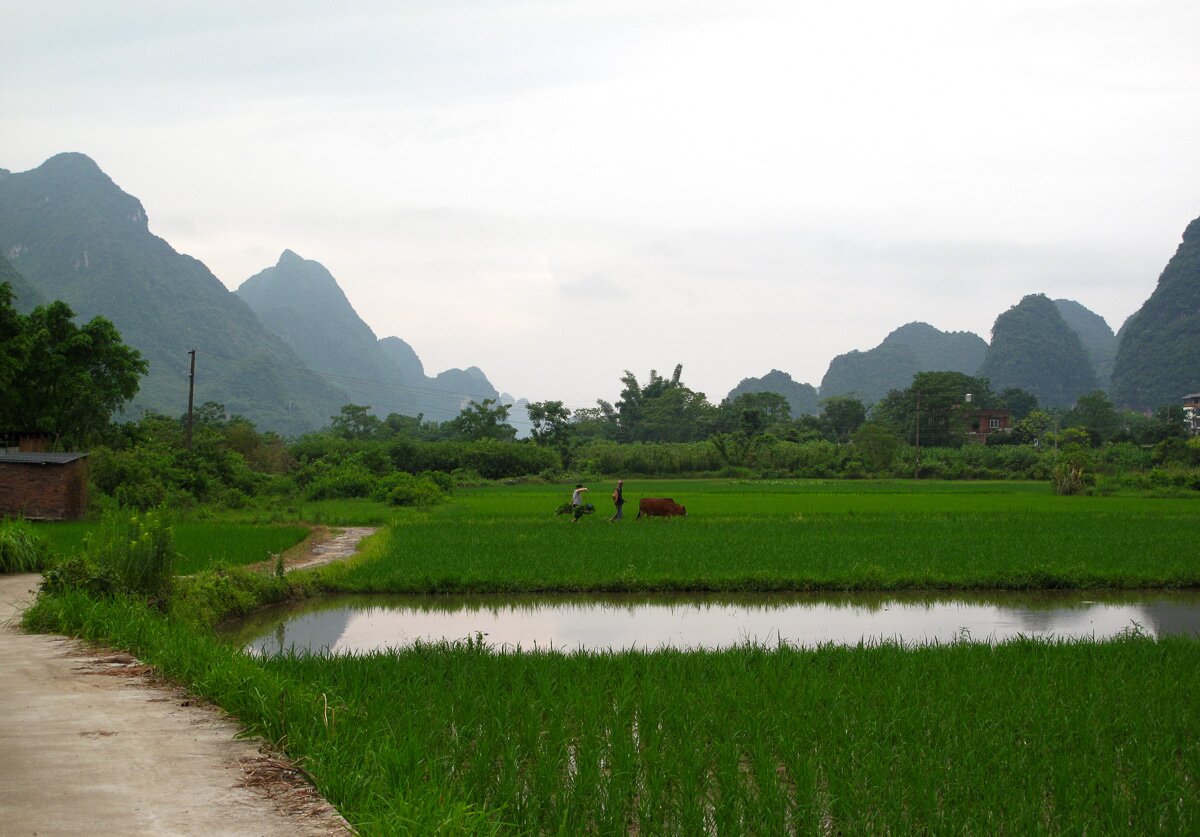
For a first mountain chapter in China, you want drama without needless suffering: clear trails, support where it matters, and scenery that still feels surreal. These regions have inspired painters and poets for centuries — and they remain the best on-ramps for hikers who want culture and comfort in the same frame.
Guilin — karst wonderland
In southern China, Guilin is synonymous with surreal limestone towers. Peaks sculpted by millions of years of erosion rise from verdant plains, often half-hidden in mist. A gentle Li River passage or a relaxed walk through Yangshuo's countryside delivers scroll-painting views without forcing extreme gain. It is an ideal first taste of Chinese shanshui — mountain-water aesthetics — with light trekking and strong photography rewards.
For a full beginner-friendly week that treats the karst as a classroom, see China's Mountains 101 — Guilin.
Huangshan — the Yellow Mountain's mystical beauty
Often called China's most beautiful mountain, Huangshan is a UNESCO-listed masterclass in granite, wind-sculpted pines, and seas of cloud. Cableways and stone stairways make its drama accessible while still demanding respect for weather and steps. It is both a photographer's obsession and a spiritual shorthand for Chinese landscape art — the mountain you have already seen in ink, now in three dimensions.
Our dedicated Huangshan week links geology, painting history, and Huizhou village culture; book China's Mountains 101 — Huangshan.
Mount Hua — perilous beauty, sacred peak
Near Xi'an, Mount Hua (Huashan) is one of the Five Great Mountains, famous for sheer cliffs, exposed planks, and Taoist heritage. Not every route requires a harness, but all of them require attention. Done responsibly, Hua is where many travelers feel China's "sacred peak" idea for the first time — vertical, theatrical, and deeply storied.
Our safety-first introduction to Hua's culture and trails is here: China's Mountains 101 — Mount Hua.
Part 2 进阶 · Alpine & culture
Beyond the postcards — alpine trails & deeper encounters
Intermediate mountain travel in China means longer days, more vertical, and richer ethnic context — Tibetan, Naxi, Yi, and others — woven into the same landscape. You are still on paths, but the margin for error shrinks as altitude and exposure grow.
Zhangjiajie — stone forests in the mist
Zhangjiajie's sandstone pillars, often wrapped in fog, gave popular culture a shorthand for "floating mountains." The reality is staircases, cableways, and big crowds in places — but also genuine geological wonder. We treat it here as a reference landscape many hikers dream about; ask us how it might pair with a longer Yunnan or Sichuan arc if you want it on your itinerary.
Mount Qingcheng — Taoist forest and mountain calm
Before you commit to the high gorge country, Sichuan offers gentler elevation with serious cultural density. Mount Qingcheng is famed as a cradle of Taoist landscape sensibility — bamboo shade, stream sound, and monastery time. It is a strong bridge between "cultural hike" and the harder days ahead on the Jinsha River.
Join the Qingcheng field week here: China's Mountains 101 — Mount Qingcheng.
Tiger Leaping Gorge — high trail above the Jinsha
One of China's great river gorges, Tiger Leaping pairs sustained trail work with Naxi heritage and raw hydrology — the kind of place where you feel tectonics in your knees. Our advanced week here assumes fitness, sure footing, and respect for weather.
Note: China's Mountains 201 routes require a minimum of two travelers on the same booking.
Details: China's Mountains 201 — Tiger Leaping Gorge.
Part 3 高阶 · Thin air
The roof of the world & untamed wilderness
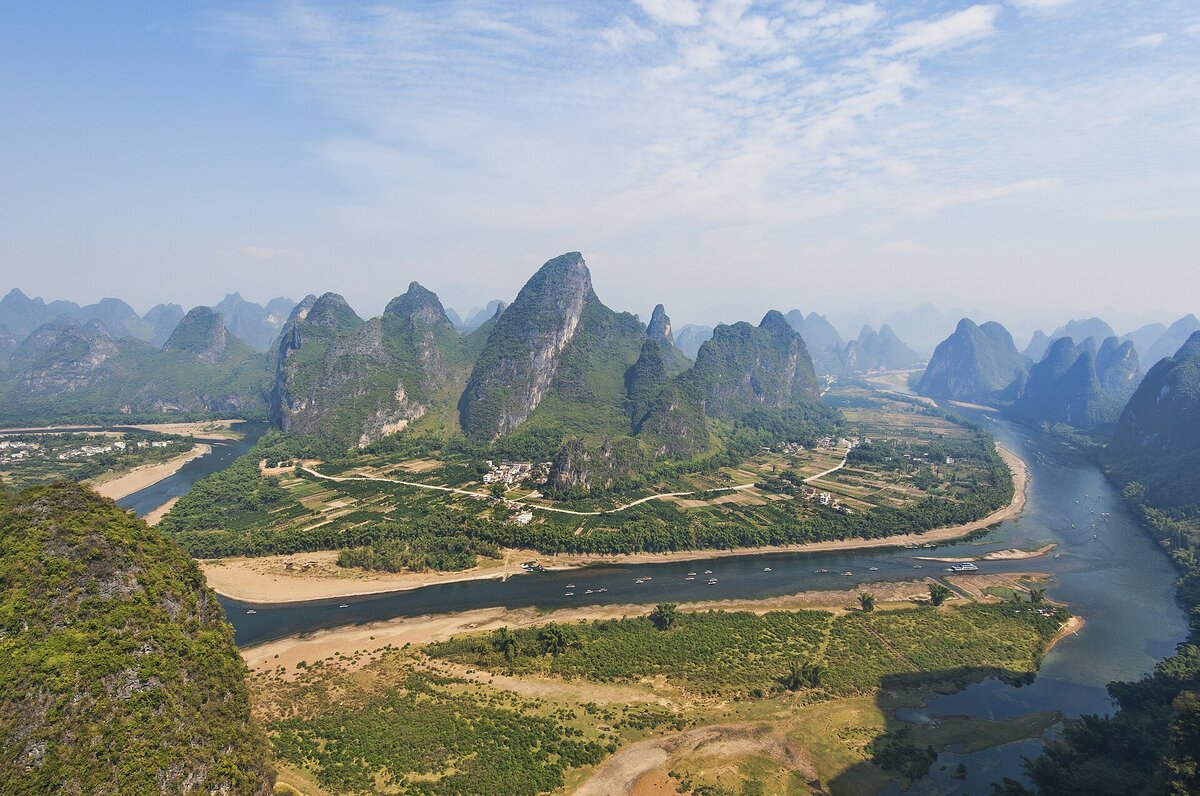
Advanced mountain travel means multi-day effort, remote support, and honest acclimatization. China's share of the Himalaya and the Tibetan Plateau holds some of the planet's most dramatic skylines — and also the strictest logistical and regulatory realities. These weeks are for teams who want pilgrimage geography, Tibetan lifeways, and classroom-level debriefing at the end of hard days.
Yubeng — pilgrimage approach & glacier context
Our Yubeng route is a high-altitude field class in sacred landscape, glacier context, and village systems — not a casual add-on. It pairs physical demand with ethnographic depth and careful pacing.
China's Mountains 201 — Yubeng
Shangri-La — monasteries, meadows, Tibetan crafts
At the edge of the plateau, Shangri-La layers monastic systems, meadow ecology, and hands-on craft learning — a different angle on "high China" than the gorge trail alone. Expect cold nights, strong sun, and conversations that rewind centuries.
China's Mountains 201 — Shangri-La
Plan 行程
Plan your mountain journey
China's mountain geography is too vast for one sprint. Most guests stack 101 weeks first, then graduate to 201 routes once fitness and altitude comfort are proven. A purposeful first year might look like:
- Spring — China's Mountains 101 — Guilin (mist, soft light on the Li)
- Autumn — China's Mountains 101 — Huangshan (stable skies, sharp ridges)
- After that — China's Mountains 201 — Tiger Leaping Gorge or Yubeng with a partner
However you sequence it, the principle is the same as our history primer: depth over checklist. One mountain, many readings — geology, religion, poetry, and the people who call the slope home.
FAQ
Quick answers for mountain travelers
- What makes China different from other hiking destinations? Sacred geography stacks on top of scenery — temples, festivals, and lineages that never reduced the peak to "just a summit."
- Is it safe for older hikers? Many classic routes offer cableways, stone stairs, and rescue infrastructure; hard multi-day trails do not. Match the product to your mobility and ask us for an honest fit.
- What gear should I bring? 101 weeks reward solid shoes, layers, and rain shells; 201 routes need trail-tested boots, poles, and altitude-ready pacing. We send packing logic with your confirmation.
- Can I experience ethnic cultures respectfully? Yes — especially on 201 weeks — when you move at local pace, use interpreters, and treat villages as living communities, not photo sets.
- Why book Mountains 201 as a pair? Remote logistics, safety ratios, and community impact improve when we run small, stable teams — hence the two-guest minimum.
References
- UNESCO World Heritage Centre. South China Karst. whc.unesco.org/en/list/1248
- UNESCO World Heritage Centre. Mount Huangshan. whc.unesco.org/en/list/547
- Travel China Guide. Mount Huashan. travelchinaguide.com
- UNESCO World Heritage Centre. Wulingyuan Scenic and Historic Interest Area. whc.unesco.org/en/list/678
- National Geographic. Everest region expeditions. nationalgeographic.com