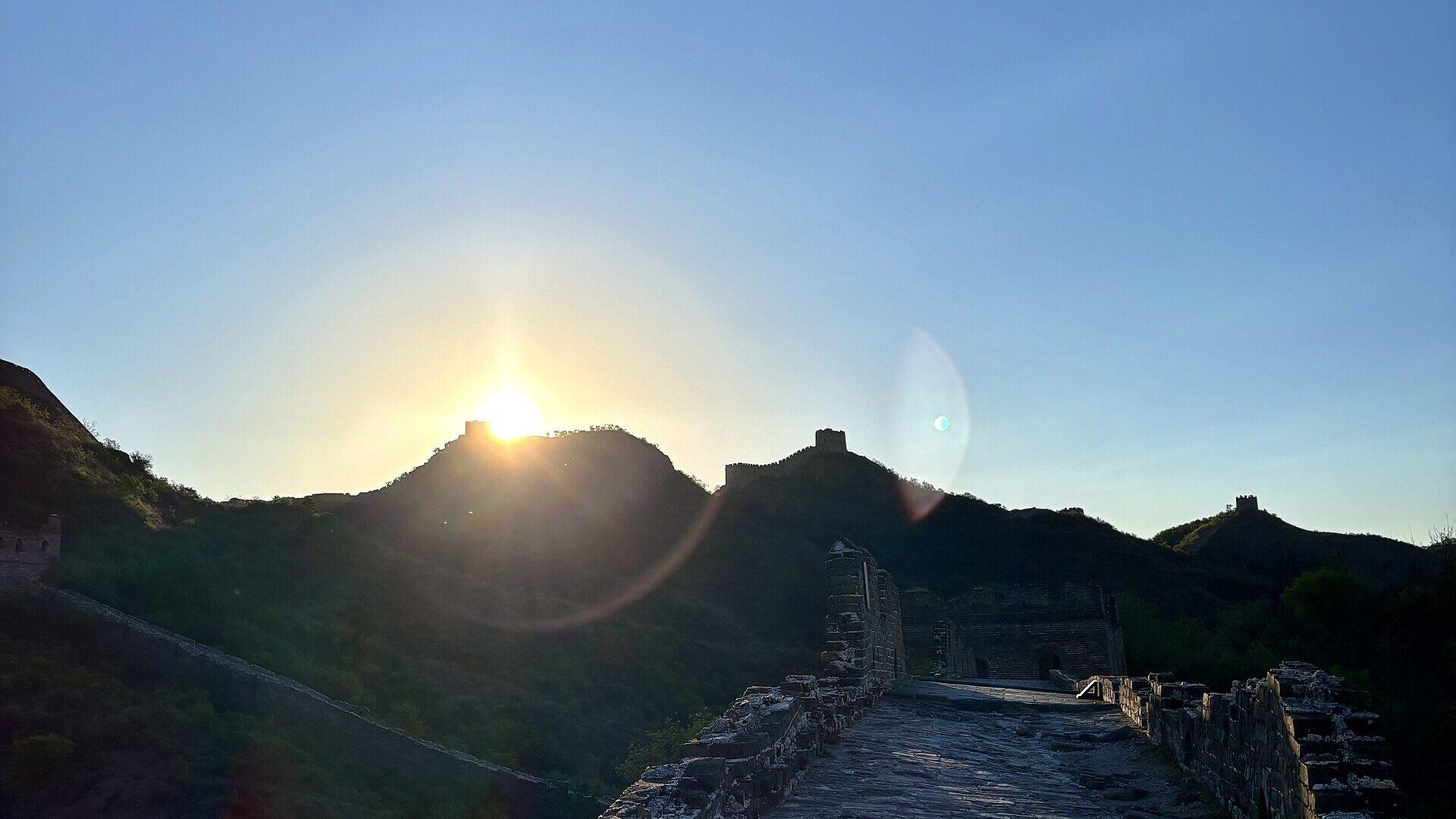
Welcome to China — a land where history is not a chapter in a textbook but a living, breathing part of everyday life. For more than 5,000 years, Chinese civilization has continuously evolved, making it one of the world's oldest and most enduring cultures. Unlike many other ancient civilizations whose legacies sit in ruins, China offers a rare opportunity to step into an unbroken thread — one that still shapes how people eat, paint, drink tea, and measure time.
Editor's picks · from Eddie
Four ways to get the most out of China's long past
- The unbroken thread. Notice how ancient traditions, the writing system, and philosophy keep resurfacing in daily life — that continuity is China's most distinctive trait.
- Scale and grandeur. The Terracotta Army and the Great Wall really do have to be seen in person; photographs cannot convey the size.
- Go layered. China's history is regional. One week in an imperial capital and one week in a provincial landscape will teach you more than one fast pass across ten cities.
- Travel with expert voices. A good local guide unlocks symbolism — the eaves, the color codes, the altar orientations — that a self-guided visit never reveals.
China: a living epic of civilization
China stands apart among the world's great ancient civilizations. While others — Egypt, Mesopotamia, the Indus valley — have seen their cultures transform almost beyond recognition, China's written language, rituals, and core philosophies have carried forward with remarkable continuity. This is why a visit here feels different: you aren't visiting relics. You're watching a heritage still in motion.
Chinese history is a grand tapestry of powerful dynasties and groundbreaking innovations. From unification under the Qin dynasty (221–206 BCE), which gave us the first long wall and the Terracotta Army, to the golden ages of the Han (206 BCE–220 CE) and Tang (618–907 CE) dynasties — when the Silk Road flourished — the past here is wide and deep. To make it approachable, we organize our programs around three complementary lenses: history, nature, and mountains.
Part 1 中国历史
Chinese History — imperial capitals & urban memory
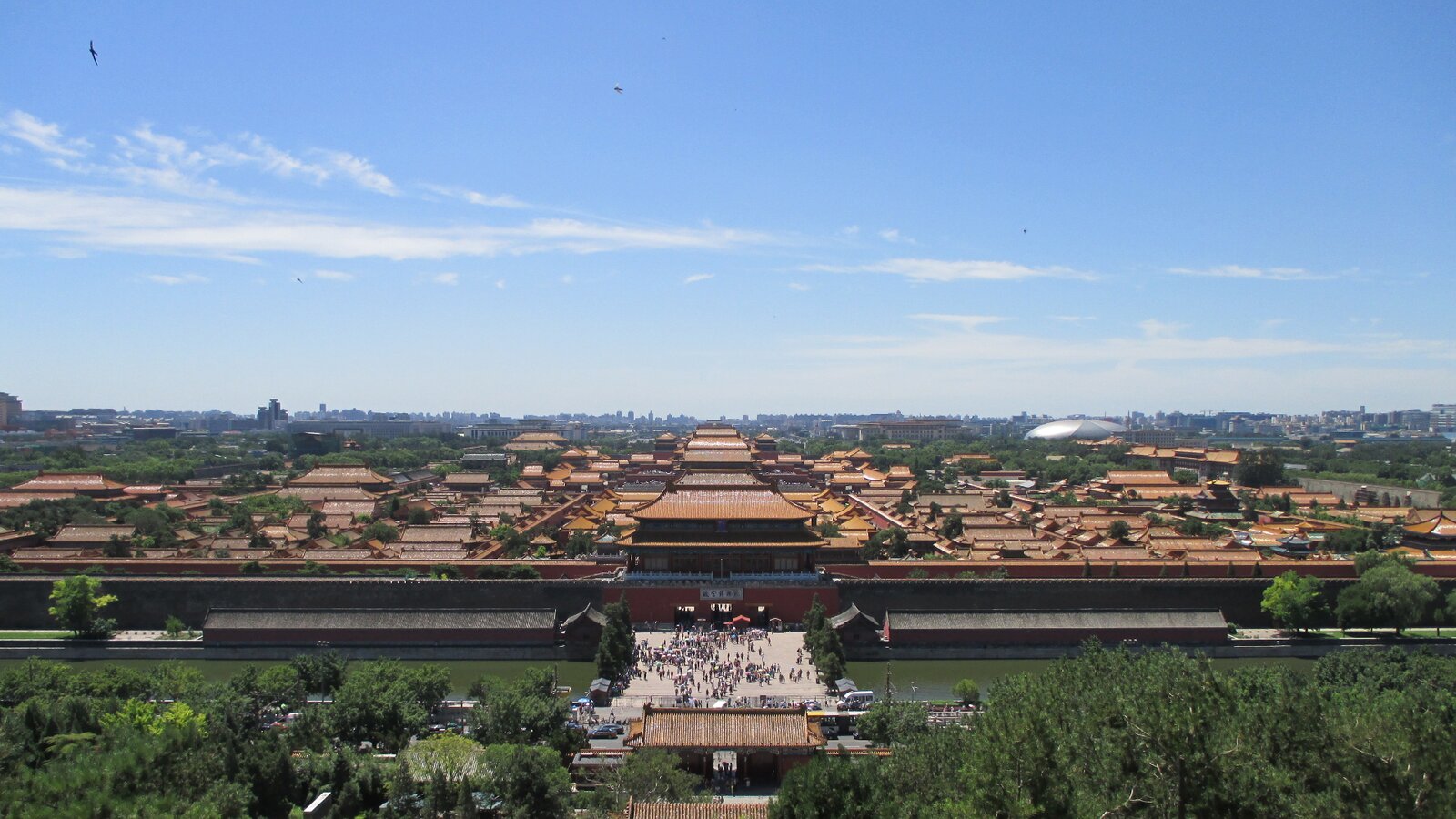
The easiest way into China's past is through its cities. Imperial capitals were designed as diagrams of the universe — north–south axes, ceremonial gates, walled precincts — and you can still walk those diagrams today. Two cities matter most for a first visit.
Beijing — the silent guardians & imperial grandeur
In Beijing, the Forbidden City served as the imperial palace for Ming and Qing emperors for nearly 500 years. Its vast courtyards, intricate timber architecture, and the measured geometry of its halls tell stories of power, ritual, and daily court life. Walking through its gates is like stepping back in time. Beyond the palace, the Temple of Heaven shows how emperors performed their cosmic duty, while the Great Wall at Mutianyu or Jinshanling — stretching across Yan Mountain ridges — gives you the physical scale of empire-level defense.
Farther west in Xi'an, thousands of life-sized clay warriors guard the tomb of China's first emperor. The Terracotta Army is a breathtaking testament to ancient craftsmanship and imperial ambition. For the full Beijing-focused week, see Chinese History 101 — Beijing.
Hangzhou — Southern Song capital & the culture of Jiangnan
For much of the 12th–13th centuries, Hangzhou was the largest city on earth. When the Jurchen took the Northern Song capital, the court moved south and rebuilt on the shores of West Lake — producing a flowering of poetry, classical painting, tea culture, and the garden tradition that would shape Chinese aesthetics forever after. Marco Polo famously called it "the finest and most magnificent city in the world." Today the lake's causeways, pagodas, and tea villages still carry that layered memory. Read more about that week in Chinese History 101 — Hangzhou.
Part 2 中国自然史
Chinese Nature History — rivers, karst, and living landscapes
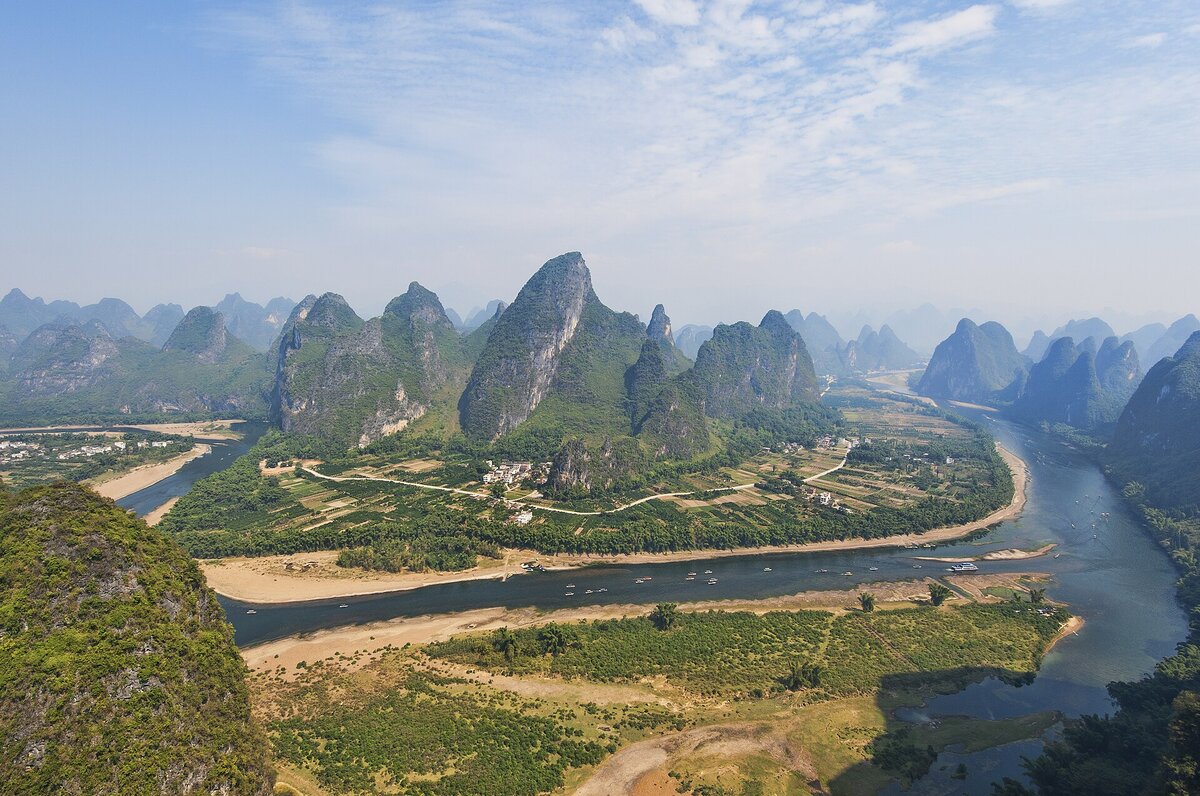
China's history isn't only urban. A second thread runs through the land itself — the rivers that organized agriculture, the mountains that defined frontiers, the rice terraces that restructured whole hillsides. This is the story below the dynasties: how geography produced a culture, and how people reshaped geography in return.
The Li River & the karst south
In Guangxi, the Li River winds between thousands of limestone peaks sculpted over millions of years — the landscape printed on the back of the 20-yuan note. It has inspired scroll paintings for a thousand years, and it still looks like a scroll painting at dawn. In the villages along its banks, Zhuang and Yao communities have farmed and fished in the same rhythms for generations, giving the region a distinct ethnic character you do not find in the imperial north.
Longji — six centuries of terraced rice
North of Guilin, the Longji ("Dragon's Backbone") Rice Terraces wrap the mountains in green staircases. First carved by the Zhuang and Yao in the Yuan dynasty some 650 years ago, they are a living example of how Chinese communities turned steep, thin-soiled terrain into productive farmland. Walking the ridge trails, you see exactly how land, water, and labor knit together into a landscape that is still working today. For a week-long deep dive into the karst and the terraces, see Chinese History 101 — Guilin.
Part 3 中国山川
China's Mountains — sacred peaks and trail routes
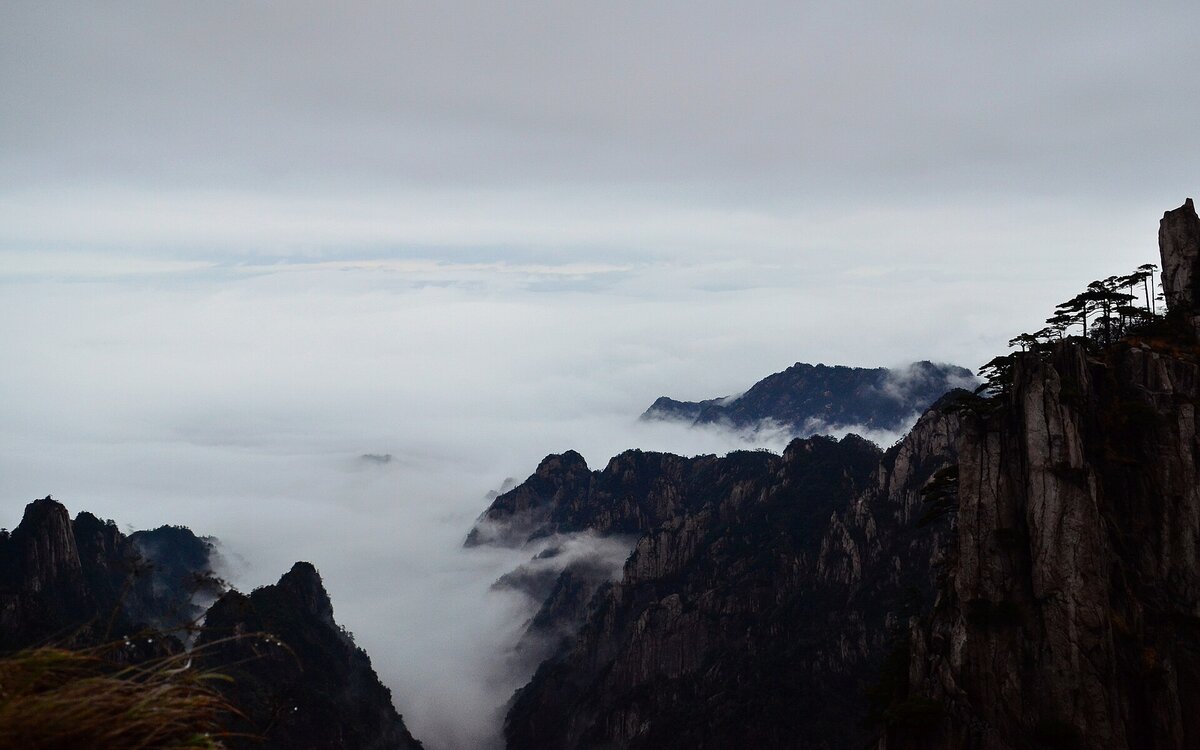
The third lens is vertical. Chinese cosmology has always paid unusual attention to mountains: the Five Great Mountains (五岳) mark the cardinal directions, Daoist and Buddhist monasteries cling to cliff walls across the country, and poets from Li Bai to Su Shi wrote their best work on mountain trails. These are not mountains as wilderness — they are mountains as cultural space, walked and written about for two thousand years.
Huangshan, in Anhui, is the most-painted mountain in Chinese art; its twisted pines and granite peaks are the visual grammar of classical landscape painting. Tai Shan, in Shandong, has been a site of imperial pilgrimage since the Han dynasty. Emei Shan, in Sichuan, is one of the four sacred Buddhist mountains. Even the Great Wall, often read as architecture, is best understood as a mountain route — the wall is the ridgeline.
If you want to understand how Chinese people see their own country, start with the cities, deepen in the rivers, and finish on a mountain.
Plan 行程
Plan your historical journey
Because China is so large and its history so layered, a single trip can only scratch the surface. Most of our guests find it more rewarding to return — one week per theme, one city at a time — than to chase ten destinations in two weeks. A common first-year shape looks like this:
- Spring — Chinese History 101 — Hangzhou (tea, gardens, West Lake at its best)
- Autumn — Chinese History 101 — Beijing (cool weather, clear skies on the Wall)
- Winter or spring — Chinese History 101 — Guilin (karst rivers under mist, terraces flooded)
Whether you are drawn to imperial capitals, ancient trade routes, or the landscapes that shaped Chinese painting, the country rewards depth. Come find out why China's history is not a story of the past — it is a narrative still unfolding.
References
- World History Encyclopedia. Cradle of Civilization. worldhistory.org
- Britannica. China — History. britannica.com
- UNESCO World Heritage Centre. Mausoleum of the First Qin Emperor. whc.unesco.org/en/list/441
- Travel China Guide. Terracotta Army. travelchinaguide.com
- UNESCO World Heritage Centre. The Great Wall. whc.unesco.org/en/list/438
- Wikipedia. Sanxingdui. en.wikipedia.org