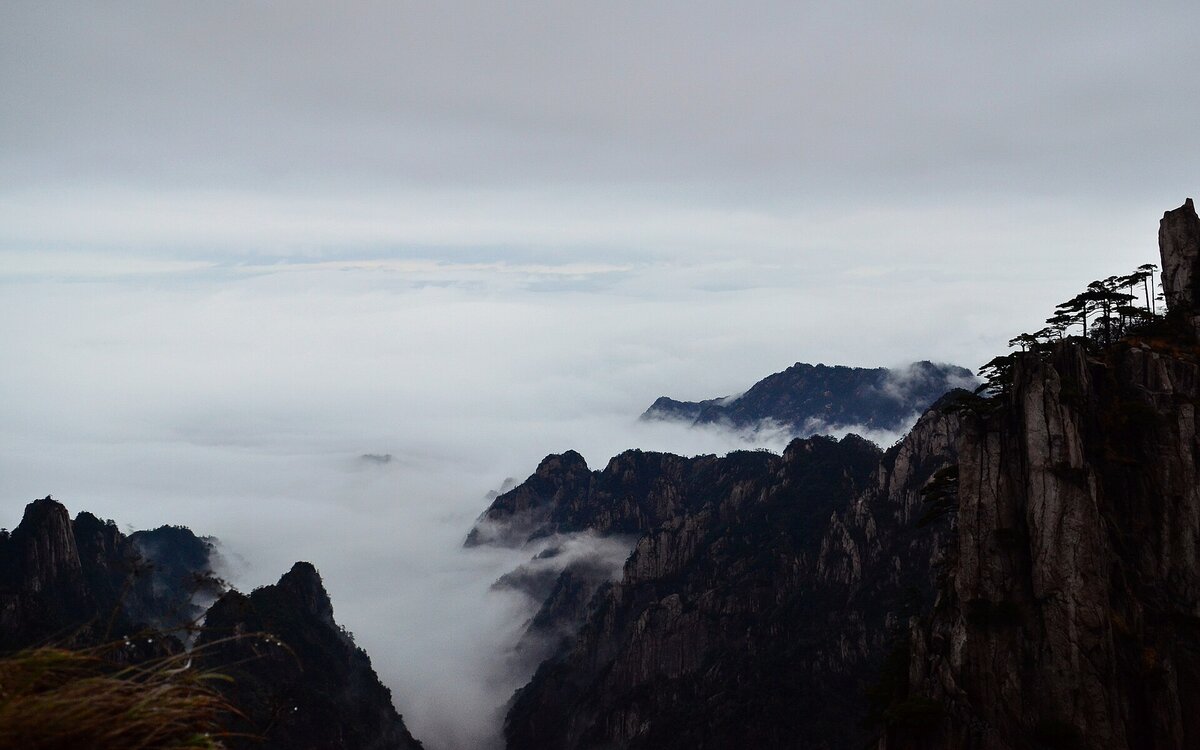
This primer follows the arc of our SEO source edition — from the Five Great Mountains and river-carved karst to alpine Sichuan–Yunnan corridors and, on the horizon, the vast frontiers of Xinjiang and Tibet. Where the map outruns what any single operator can responsibly run today, we say so plainly and point you to the China's Mountains 101 and 201 weeks DeepDive actually fields on the ground.
Editor's picks · from Eddie
How to use this long read
- Thread the Wuyue with humility. The "Five Great Mountains" are as much ritual geography as hiking — start with peaks that match your fitness, then add exposure and altitude slowly.
- Let karst teach shanshui. Guilin's Li corridor is the gentlest on-ramp to Chinese landscape aesthetics; save the gorge days for when your knees and jet-lag are under control.
- Stack altitude like a syllabus. Western Sichuan and northwest Yunnan reward acclimatization and rest days — the opposite of airport-sprint tourism.
- Trust the frontier honesty. Tian Shan or Kailash country may belong on your life list; executing them safely is a permits, season, and team equation outside a standard catalog week.
China's mountains: more than altitude
For walkers who care about culture as much as contour lines, China compresses an unusual range into one passport: Daoist ridge lines, Chan courtyards, Tibetan gompas, Naxi villages along the Jinsha, and granite walls that painters still quote. Sacred peaks were state ritual space; rivers organized tax and trade; karst gave the south its ink-wash look. None of that reduces to a single "trekking destination" — which is why we organize the library in tiered depth instead of one overloaded loop.
Part 1 文化峰林
Sacred pillars, classroom karst
The Five Great Mountains (五岳) in one paragraph
Tai (east), Hua (west), the two Heng (north & south), and Song (central) anchor a classical map of directional sanctity — emperors, pilgrims, and local societies met the state on these ridgelines. Trails today range from stone stairs to exposed ledges; not every Wuyue face is wise for a first China week. Where we already run field weeks, we link them below; other summits belong on a custom conversation when you have dates and medical clearance.
Mount Hua — vertical drama with guardrails
Huashan's reputation for exposure is deserved, but cableways and maintained stairs also make targeted cultural-and-summit days workable for prepared guests. Our China's Mountains 101 — Mount Hua (5 days) keeps safety rhetoric and Taoist narrative in the same briefing.
Guilin — poetry without punishment
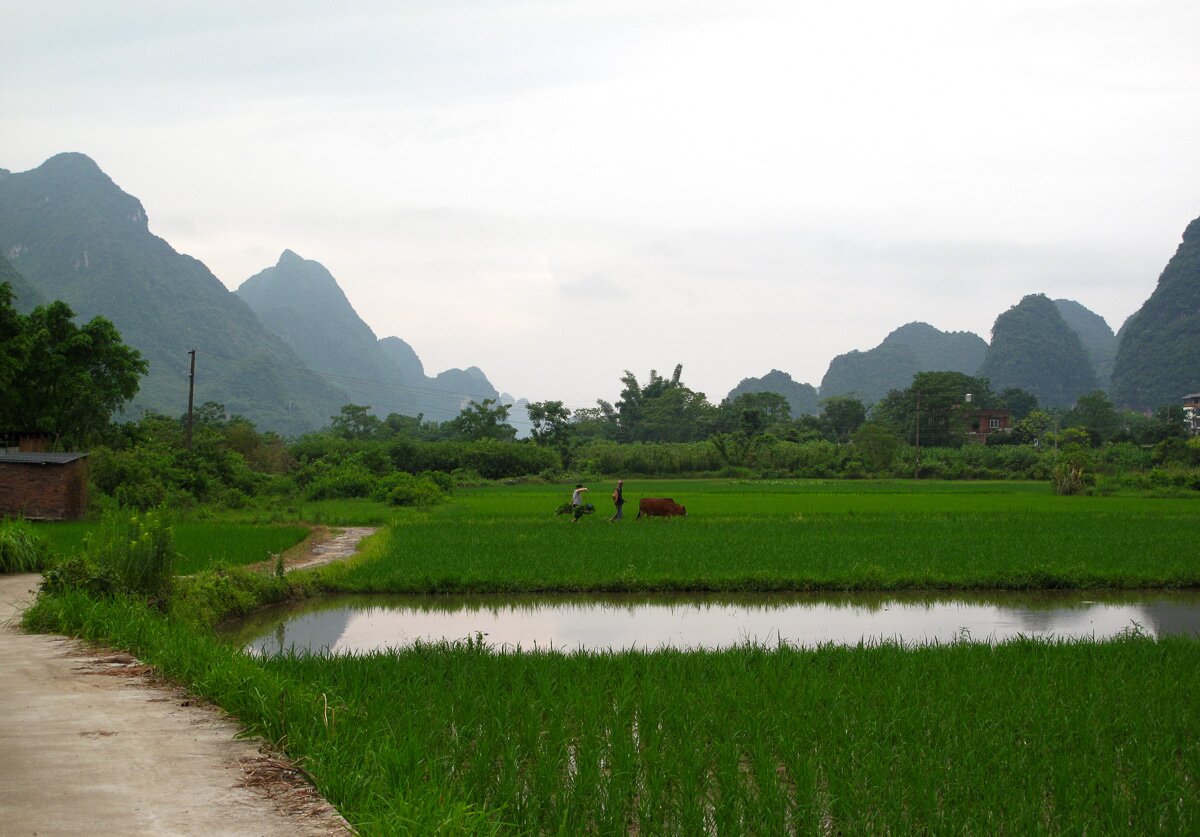
If you want Li River mist without altitude roulette, let the karst do the teaching: bamboo rafts, riverside walks, and ridge viewpoints that behave like living scroll paintings. Pair it with our China's Mountains 101 — Guilin week.
Huangshan — China's most-painted skyline
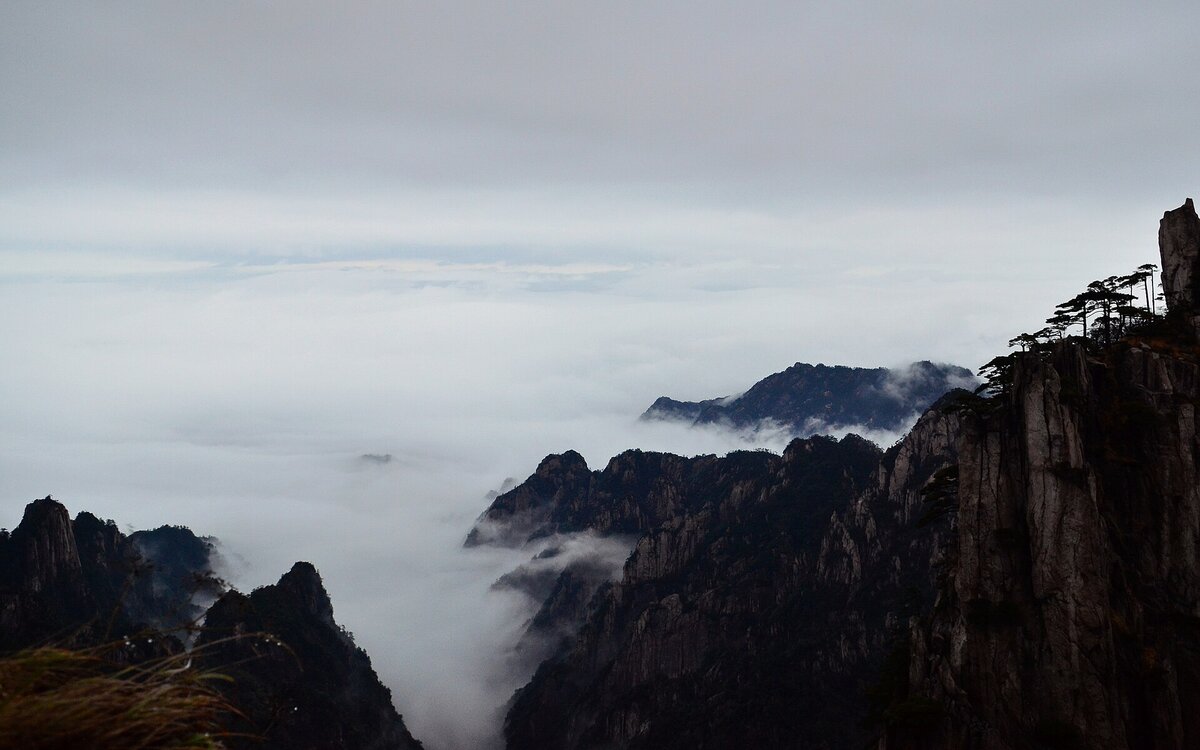
Granite towers, wind-pruned pines, and cloud oceans fed a millennium of landscape art. It is still the bridge many photographers want between "museum China" and mountain time. Program: China's Mountains 101 — Huangshan.
Part 2 高原与走廊
Alpine Sichuan & the Yunnan maze
West of the basin, the plateau lifts — Gongga and Siguniang gleam on clear days, monasteries tuck into folds, and Tibetan voices replace Mandarin on some valley floors. Southeastward, Jade Dragon and Meili dominate skylines that the Tea Horse Road once stitched to trade and temple economies. These chapters demand fitness, hydration, and ethnic courtesy as much as gear.
Qingcheng — Taoist shade before bigger steps
Bamboo corridors and soft elevation make Qingcheng a disciplined bridge between cultural hiking and what comes next on the Jinsha. Field week: China's Mountains 101 — Mount Qingcheng.
Tiger Leaping Gorge — river-cut theater
The high trail above the Jinsha pairs Naxi story with pure hydrology. Mountains 201 routes book as two travelers minimum: China's Mountains 201 — Tiger Leaping Gorge.
Yubeng & Shangri-La — plateau gateways
Yubeng asks for multi-day resolve and respectful pacing in sacred landscape; Shangri-La layers Songzanlin-scale monastic life with meadow ecology and craft. Programs: Yubeng · Shangri-La.
Part 3 旷野与信仰
Xinjiang & Tibet — the forbidden summits on the horizon
The Tian Shan, Kunlun, and Altai arcs across Xinjiang hold glacier-to-desert gradients that serious wilderness planners study for months. Tibet's average floor sits near four thousand metres; Everest Base Camp treks or a Kailash kora are spiritual and logistical projects in their own right — oxygen, permits, seasonal roads, and rescue geometry matter as much as VO2 max.
Transparency: DeepDive's catalogued weeks today concentrate on runnable southwestern corridors (101/201 above). Frontier expeditions belong in bespoke planning once your fitness profile, passport timeline, and risk tolerance are explicit. Ask us where reality matches ambition — we prefer an honest deferral to a reckless postcard.
Tiered year · 分层行程
Sketch a purposeful first mountain year
- Spring softness — Guilin mist and terraces waking up.
- Autumn clarity — Huangshan ridges under stable skies.
- After grading up — partner-booked Tiger Leaping or Yubeng when your legs and lungs agree.
For philosophy that spans threads, compare our original mountains primer and Chinese History primer — same rule: depth beats checklist.
FAQ
Quick answers
- Who is each tier for? 101 weeks assume curious adults with moderate hiking comfort; 201 assumes trail fitness, partner booking where noted, and tolerance for altitude swings.
- Altitude? Pre-acclimatize sleep, hydrate, ascend gradually; we brief medications conservatively and defer to your physician.
- Minority corridors? Dress modestly, ask before portraits, tip services fairly, and let guides negotiate temple etiquette.
- Seasonality? Karst loves misty springs; Huangshan autumn is famed for clarity; high Yunnan wants storm awareness in summer monsoon.
- Why mention Xinjiang/Tibet without a buy button? Because integrity matters — when we sell a week, we know we can resource it; when we cannot yet, we still owe you the geographic truth.
References
- Wikipedia. Five Great Mountains. en.wikipedia.org/wiki/Five_Great_Mountains
- UNESCO World Heritage Centre. South China Karst. whc.unesco.org/en/list/1248
- China Highlights. Western Sichuan Travel Guide. chinahighlights.com
- National Geographic Expeditions. Himalaya & Tibetan Plateau context. nationalgeographic.com/expeditions
- Travel China Guide. Guilin Mountains and Rivers. travelchinaguide.com