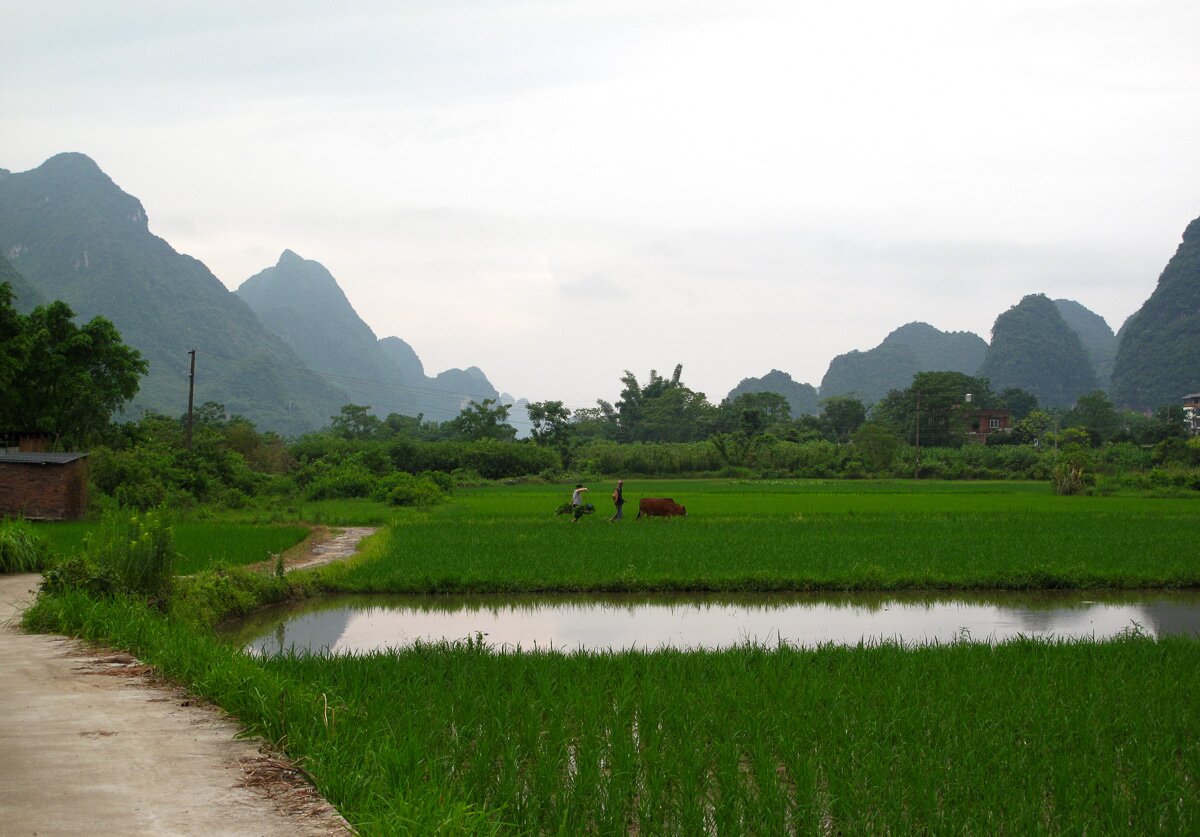
Chinese "natural history" is not only national parks on a checklist; it is Deep Time made legible on the surface — India–Eurasia uplift sculpting monsoon Asia, Jinsha meanders cutting Tiger Leaping country, Chengjiang's Cambrian fireworks frozen in shale. This primer follows our PDF arc for travelers who want context before mileage, then points to runnable field weeks where karst rivers, alpine terraces, and classical gardens already anchor how we teach landscape in the field.
Editor's picks
Five lenses that reward repeat entry
- Tectonics first. Once you picture the Tibetan Plateau pumping the monsoon engine, downstream humidity and canyon drama snap into focus.
- Fossils as compass. Chengjiang and Sichuan basin dinosaurs are story anchors — even when your week never enters a museum warehouse.
- Tiered topography. China's west-to-east steps explain why the same latitude can feel subtropical gorge or cold plateau within one province hop.
- Human overlay. Dujiangyan, canals, terraces — civilization here often means negotiating gravity and silt, not defeating it.
- Pacing beats panorama-gluttony. Natural history rewards multi-entry framing; one corridor per journey beats airport whiplash.
Deep Time 地质史诗
Earth's pulse — plateau, fossils, Asian climate
The ongoing India–Eurasia collision lifted the Qinghai–Tibet Plateau and the Himalayan arc, reorganizing atmospheric circulation across Asia: monsoon rains, river headwaters, and biodiversity stacked by altitude. Standing on any eastern rampart, you are arguably watching that Cenozoic story still unfold.
China also preserves readable chapters of life's messy experiment — Chengjiang's Cambrian biota, immense sauropod discoveries in Sichuan and Xinjiang, trilobite beds in northwest strata. You need not collect specimens to benefit; knowing what the stone records changes how attentively you walk a shale slope.
Landforms 地貌博物馆
Karst, Danxia, yardang, fire & loess
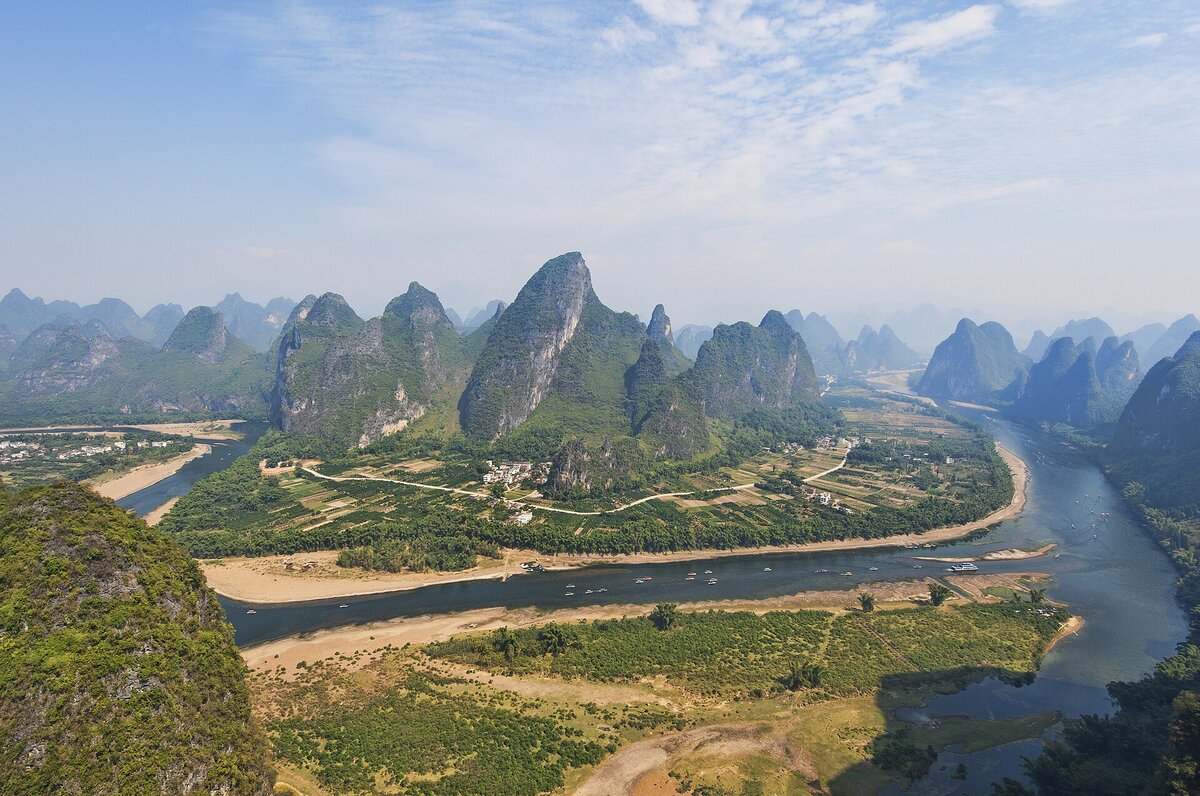
Students of landscape often call China a geomorphic museum: tiered topography stepping from plateau to basin to coastal plain; subtropical tower karst (think Li River dissolution chemistry); Zhangye-style Danxia palettes where sandstone bedding meets erosion artistry; wind-sculpted yardangs along old Silk Road edges; Tengchong's volcanic mood in Yunnan; loess canyons recording aeolian patience on the plateau margins.
Runnable corridor for tower karst: our beginner-friendly immersion treats the Li basin as classroom terrain — China's Mountains 101 — Guilin (5 days). For travelers who prefer imperial-city framing with comparable landscape days, pair planning with China History 101 — Guilin.
Granite drama & classical painting lineage: China's Mountains 101 — Huangshan foregrounds pine-and-cloud aesthetics that fed a millennium of ink aesthetics.
Symphony 人文与自然
Rivers, harmony cosmology, engineered valleys
The Yellow River and Yangtze are not scenic wallpaper; they are sediment engines that conditioned North vs South agriculture, canal metaphysics, and flood politics. Gardens, poems, and landscape painting elevated landforms into ethics — shan shui as argument about proportion rather than conquest. Engineering tales from Dujiangyan to Grand Canal corridors show deliberate collaboration with hydraulic reality; your trail legs inherit those gradients.
Tiered journeys · 分层探索
Where DeepDive starts today
- Tier I — readable classics: Guilin karst corridors, Huangshan granite skies, Beijing's layered nature-within-capital rhythm via China History 101 — Beijing.
- Tier II — southwest drama: northwest Yunnan gorge and plateau weeks already catalogued under Mountains 201 when you are ready for exposure and altitude etiquette.
- Tier III — bespoke frontier: Xinjiang paleontology, Tibetan transects, singular Danxia circuits — plan with permits, seasons, and honest fitness accounting; not every corridor ships as a cookie-cutter SKU.
Cross-read: our Chinese History primer for civilization pacing and China's Mountains introduction for vertical China.
FAQ
Quick answers
- Why call China a geomorphic museum? Continental scale stacks nearly every major landform class from hyper-arid basins to tower karst — minus classic glacial fjords.
- Seniors or slower walkers? Many flagship corridors offer cableways, staged days, and elevation-managed pacing; remote frontier tiers may not.
- Wildlife? Expect region-specific ecology — pandas require permit forests; birding fluctuates by migration windows.
- Multi-entry philosophy? Depth and jet-lag recovery beat checkbox sprinting across incompatible landforms.
References
- Encyclopaedia Britannica. China — relief, plateaus, rivers. britannica.com
- Wikipedia. Chengjiang biota. en.wikipedia.org
- Wikipedia. Mamenchisaurus. en.wikipedia.org
- WindhorseTour. China landscapes & geography guide. windhorsetour.com
- People's Daily Online. China's top Danxia landforms (2014). en.people.cn