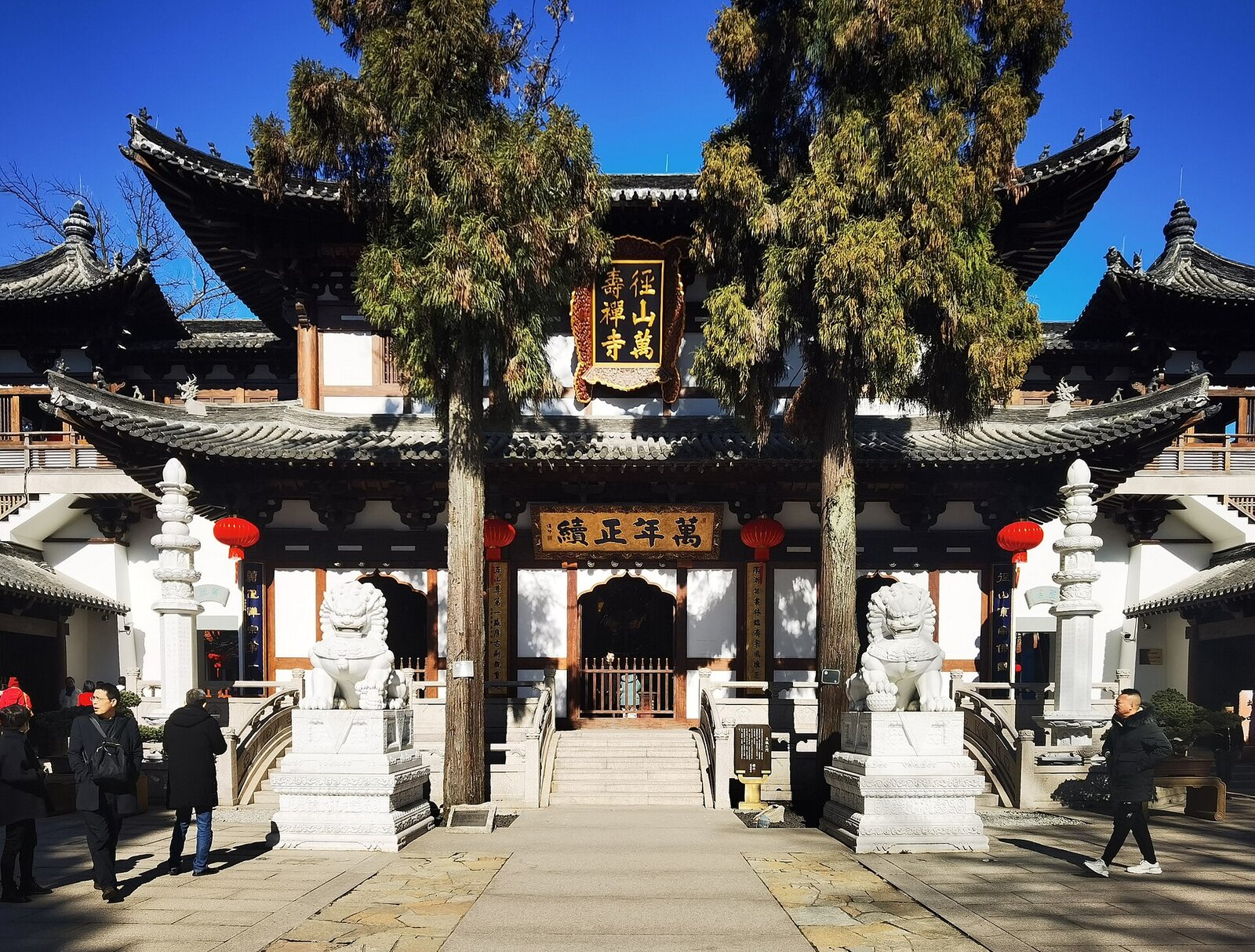
Hey Deep Divers! Eddie here, your Guilin local with a global soul. We’ve walked Taoist mist; today we follow the compass of the heart — China’s sacred Buddhist mountains. I’ve stood in thin air at the Potala and heard morning bells at Hangzhou’s Lingyin, but the Five Peaks read like a syllabus of virtues: wisdom, practice, compassion, vow, joy. Here is how to think about them before you lace up.
Library cross-reads
Context before altitude
Pair this with our Chinese Natural History primer for landforms and deep time, and China’s Mountains introduction for how we pace ridgeline weeks in the field.
Introduction: Finding the “Compass” in the Sacred Peaks
These aren’t only mountains; they are spiritual power spots where nature and enlightenment have talked for more than a thousand years. Whether it’s the wisdom of Mount Wutai or the compassion of Mount Putuo, the peaks offer a roadmap for the soul — a living map of the Middle Kingdom’s Buddha-lands.
Eddie’s Picks: Choosing Your Spiritual Journey
| If you want… | Go to… | Why Eddie loves it |
|---|---|---|
| Ancient history & wisdom | Mount Wutai | Standing in a Tang wooden hall feels like time travel. |
| Majestic views & effort | Mount Emei | The Golden Summit in a sea of clouds is the ultimate “practice.” |
| Ocean breezes & healing | Mount Putuo | Guanyin’s presence where waves meet sutra sound. |
| Deep vows & mystery | Mount Jiuhua | Devotion you can feel in the mist. |
| Joy & lightheartedness | Mount Xuedou | The laughing Buddha always makes me smile. |
What is a Buddhist Sacred Mountain? A Map of the Spirit
In the Chinese spiritual map, certain mountains are read as earthly residences (bodhimanda) of great Bodhisattvas — where high peaks touch heaven and valleys hold the silence awakening needs.
A mountain becomes a Buddhist sacred site through:
- Faith positioning — each peak linked to a Bodhisattva (Guanyin at Putuo, and so on).
- Spatial construction — temples, pagodas, and incense paths turn the land into a living mandala.
- Continuous use — a millennium of chant, walking, and devotion by monastics and pilgrims.
The Big Five: From Northern Highlands to Eastern Seas
Tradition speaks of the Four Great Mountains; many travelers today add a fifth. Each has a different vibe:
- Mount Wutai (Shanxi) — the “Cool Mountains,” high plateau devoted to Mañjuśrī (wisdom). UNESCO-listed Tang wood architecture and a braid of Han and Tibetan practice.
- Mount Emei (Sichuan) — the “Lofty Mountain,” Samantabhadra (practice). Golden Summit, cloud seas, and Leshan’s giant Buddha nearby.
- Mount Putuo (Zhejiang) — “Mount Potalaka of the East,” island devotion to Guanyin (compassion) where surf meets sutra.
- Mount Jiuhua (Anhui) — lotus peaks for Kṣitigarbha (great vow), misty valleys and flesh-body Bodhisattva lore.
- Mount Xuedou (Zhejiang) — Maitreya (joy), giant laughing Buddha, forward-facing warmth.
Five Mountains, Five Virtues: Wisdom, Practice, Compassion, Vow, and Joy
Each peak is a school for a human virtue:
| Mountain | Bodhisattva | Virtue | Core vibe |
|---|---|---|---|
| Wutai | Mañjuśrī | Wisdom | Cool, intellectual, ancient. |
| Emei | Samantabhadra | Practice | Majestic, climbing, doing. |
| Putuo | Guanyin | Compassion | Oceanic, healing, prayerful. |
| Jiuhua | Kṣitigarbha | Vow | Devotional, deep, transformative. |
| Xuedou | Maitreya | Joy | Happy, inclusive, future-facing. |
The Three Pillars: Temples, Pilgrimage Paths, and Natural Wonders
On the ground, watch for three layers working together:
- Temples (si) — from Tang timber at Foguang on Wutai to golden halls at Huazang on Emei, architecture anchors the spirit.
- Pilgrimage paths (xiangdao) — the journey is the curriculum. Incense trails and staircases are Zen in motion.
- Natural wonders — “Buddha’s light” weather on Emei, tide sound at Putuo, Wutai cool — read as phenomena and metaphor at once.
Foothill Civilization: Incense, Vegetarian Food, and Mountain Life
Base towns carry as much texture as the summit:
- Vegetarian cuisine (suzhai) — not merely “no meat,” but mountain mushrooms, bamboo shoots, wild herbs — ethics on a plate.
- Temple stays — waking to the morning bell is a reset you remember for years.
- Local markets — Tai mushrooms, Buddha tea, crafts — economy braided with pilgrimage season.
FAQ: Planning Your Pilgrimage to the Buddha-lands
Q: Do I need to be Buddhist to visit?
A: No. These are cultural, historical, and natural treasures open to everyone.
Q: Which mountain is easiest for a first-timer?
A: Putuo and Xuedou are relatively approachable. Wutai and Emei demand more legs and layers.
Q: What should I wear?
A: Cover shoulders and knees in halls; carry layers — summits stay cold even in summer.
Q: Is the food good for vegans?
A: Buddhist suzhai is often a vegan dream; still ask about eggs or dairy at commercial restaurants.
References: Dive Deeper into the Research
- UNESCO. Mount Wutai. whc.unesco.org
- UNESCO. Mount Emei Scenic Area, including Leshan Giant Buddha Scenic Area. whc.unesco.org
- Wikipedia. Four Sacred Mountains of Buddhism. en.wikipedia.org
- Personal experience. Eddie’s travels to Wutai, Emei, and Putuo. (2024).
- China Highlights. Mount Jiuhua travel guide. chinahighlights.com
- Travel China Guide. Mount Putuo. travelchinaguide.com
- China Highlights. Mount Xuedou. chinahighlights.com
- Buddhist Association of China. China Buddhism portal. chinabuddhism.com.cn
- Travel China Guide. Buddhism in China. travelchinaguide.com
- China Highlights. Mount Emei. chinahighlights.com
Ready to find your inner compass? DM me to start your Deep Dive today!