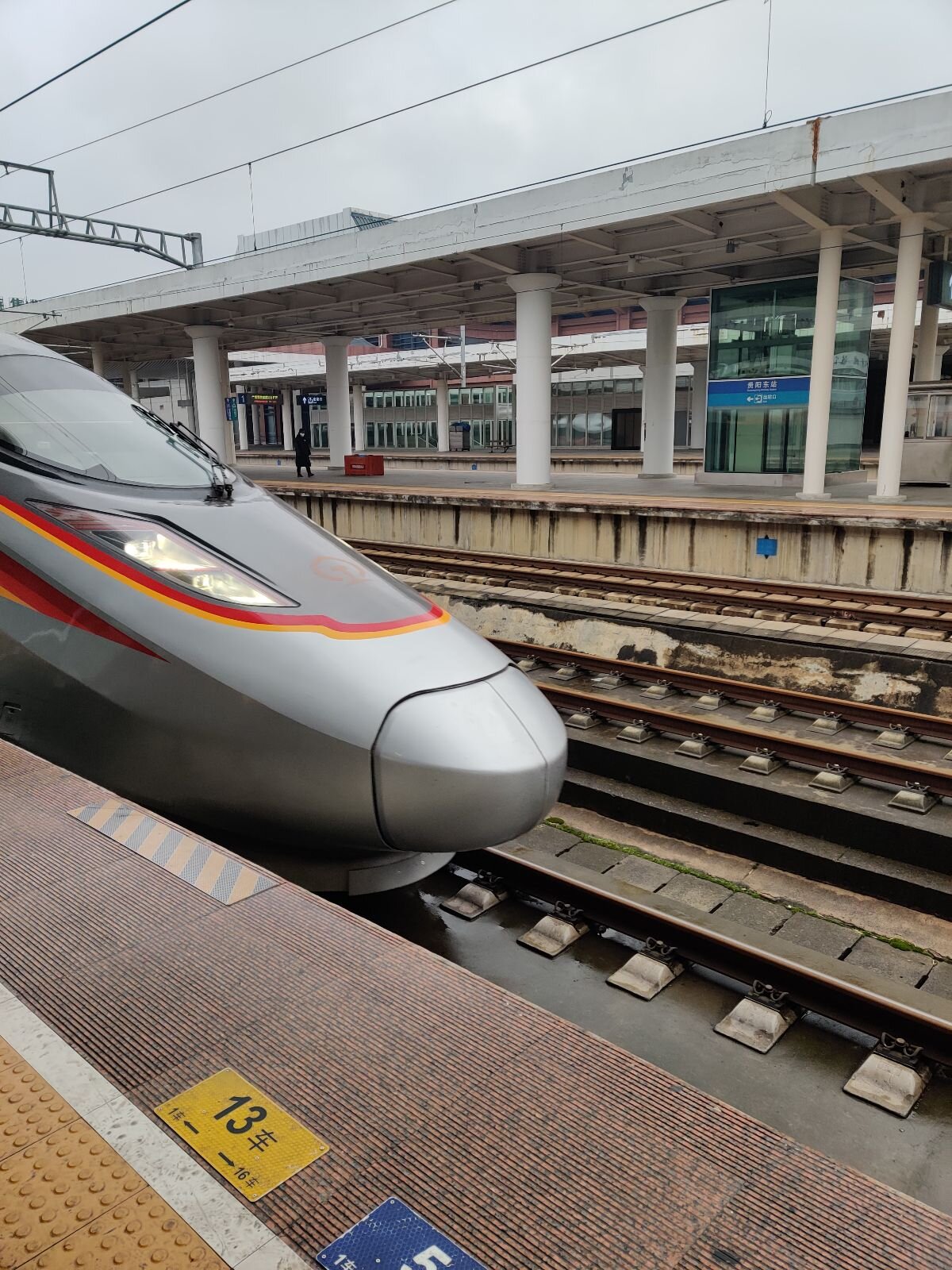
Beyond the concrete — China’s high-speed rail is not only mileage on a map. For anyone who wants context before mileage, the HSR network is a time machine: it turns what used to be overnight “green train” epics into civilized day trips, keeps city centers connected to city centers, and turns the window seat into a documentary of geography, industry, and daily life.
Hey explorers
Confession: I’m a transportation nerd. I remember Beijing in my PKU days when the subway had only four lines and cross-country travel meant overnight slow trains — instant noodles, shared stories, and the gentle rhythm of steel wheels. Fast forward to 2026: China has built on the order of 50,000 km of high-speed rail. Standing on a platform at Beijing South, watching a Fuxing Hao glide in like a silver needle, still feels like the future arriving on schedule.
That is the lens of this Insider’s Look: how to use the network as a deep traveler — not as a gimmick, but as infrastructure that changes what “possible in one week” actually means.
Eddie’s picks: bucket-list HSR legs
If you are planning a Deep Dive week, these legs reward the window seat and keep your pacing humane:
| Route | The vibe | Insider tip |
|---|---|---|
| Beijing → Shanghai | The “business” bullet | Take a non-stop around 4h18 when you can — it is the gold-standard rhythm between the political north and the Yangtze engine room. |
| Shanghai → Hangzhou | The zen escape | About 45 minutes. Lingyin Temple by lunch is realistic if you resist sleeping through Zhejiang countryside. |
| Xi’an → Chengdu | The foodie express | Crosses the Qinling: terracotta mornings can become peppercorn afternoons with sane connections. |
| Kunming → Vientiane | The cross-border thread | A frontier on how Chinese engineering meets Southeast Asia — read permits and border time as part of the adventure. |
The Beijing–Shanghai run: my personal “commute” through history
I have spent serious slices of life between these two megacities — including stretches when Wutong was home base and Beijing was meetings and hutong walks. The 1,318 km spine used to be an ordeal; now it is a half-day of changing architecture: imperial grey and northern masonry giving way to the watery green grammar of the delta. If you want to feel China’s “dual soul” without a security line theatre, this is the cleanest line in the book.
Why the train window is a better documentary than Netflix
- Transformation: hamlets tucked into hills, industrial parks that did not exist when your guidebook was printed, rice paddies that have existed for dynasties.
- Engineering: Yangtze and Yellow River crossings as honest reminders of scale — bridges as arguments about what the state can still build.
- People: students headed home, founders on laptops, families on holiday — the carriage as public living room.
Inside the Fuxing Hao: coffee, Wi-Fi, quiet cars
Fuxing (“Rejuvenation”) sets the current bar: even second class often beats short-haul economy for legroom; power and data are part of the seat pitch; and if you need sleep or deep work, hunt the quiet car (jing yin che xiang) when booking — it is one of the few travel hacks that costs almost nothing and buys back your attention.
The deep traveler’s edge: when to skip the plane
Rule of thumb I give friends: if the train is under five hours, do not open the flight tab first.
- No airport tax on your calendar: major stations sit in the urban fabric — not a taxi siege to Pudong or Daxing.
- Punctuality culture: rain or shine, the diagram is serious.
- Carbon and comfort: for continent-scale China, rail is often the greenest and least dehumanizing option.
- Felt distance: you earn the mental map of the country in slices; flights erase the middle chapters.
Want routing help? Browse Deep Dive programs or start with a free planning call — we map HSR into weeks, not wishlists.
FAQ
- How do I book? Official 12306 flows and reputable aggregators (e.g. Trip.com) both work with passports; digital tickets are the norm.
- Is the food edible? Improving — station pickup and car delivery exist on some routes. I still sometimes grab a rou jia mo on the concourse when nostalgia strikes.
- Drones? Often allowed in bags, but your real constraint is local no-fly rules at the destination — read county-level notices, not vibes.
References
- China State Railway Group — operations and network statistics (official releases).
- Independent rail journalism (e.g. Seat61 China overviews) for booking mechanics and cabin classes.
- Photo: Wikimedia Commons, File:Fuxing train in Guiyang East.jpg (Thehistorianisaac; CC0).
