Table of Contents 1. Introduction 2. Editor's Picks 3. The Giant Panda: A National Treasure 4. Conservation Journey: From Endangered to Vulnerable 5. Giant Pandas Around the World: Diplomacy and Conservation 6. The Future of Panda Conservation 7. FAQ 8. References
Introduction
The Giant Panda (Ailuropoda melanoleuca) stands as an unparalleled symbol of wildlife conservation, not just for China but for the entire world. With its distinctive black and white fur, gentle demeanor, and bamboo-centric diet, this iconic bear has captured the hearts of millions and become the emblem of global conservation efforts. Once teetering on the brink of extinction, the Giant Panda's journey from Endangered to Vulnerable is a testament to decades of dedicated work by scientists, conservationists, and governments worldwide [1].
This in-depth SEO article explores the fascinating world of the Giant Panda, delving into its biology, the history of its conservation, and its significant role in international diplomacy. We will also highlight the presence of these beloved bears in zoos across the United States and Europe, showcasing how these institutions contribute to their survival and global awareness.
Editor's Picks
For those eager to learn more about Giant Pandas and their global impact, here are our top recommendations:
| Focus Area | Key Experience | Why It's Essential |
|---|---|---|
| Conservation Success | Understanding the journey from Endangered to Vulnerable | A powerful narrative of hope and effective conservation strategies. |
| International Presence | Discovering where pandas reside outside of China | Highlights global collaboration and the role of zoos in conservation and research. |
| Cultural Significance | Exploring the panda's role as a symbol of peace and friendship | Reveals the deeper diplomatic impact of these charismatic creatures. |
The Giant Panda: A National Treasure
Native to the mountainous regions of central China, primarily in Sichuan, Shaanxi, and Gansu provinces, the Giant Panda is a unique member of the bear family. Its diet consists almost exclusively of bamboo, consuming up to 12 to 38 kilograms (26 to 84 pounds) daily [2]. This specialized diet plays a crucial role in its ecological niche and has shaped its evolutionary path.
Giant Pandas are solitary animals, known for their calm and peaceful nature. They play a vital role in the bamboo forests they inhabit, acting as seed dispersers and contributing to the health of the ecosystem. Their survival is intrinsically linked to the preservation of these unique forest habitats.
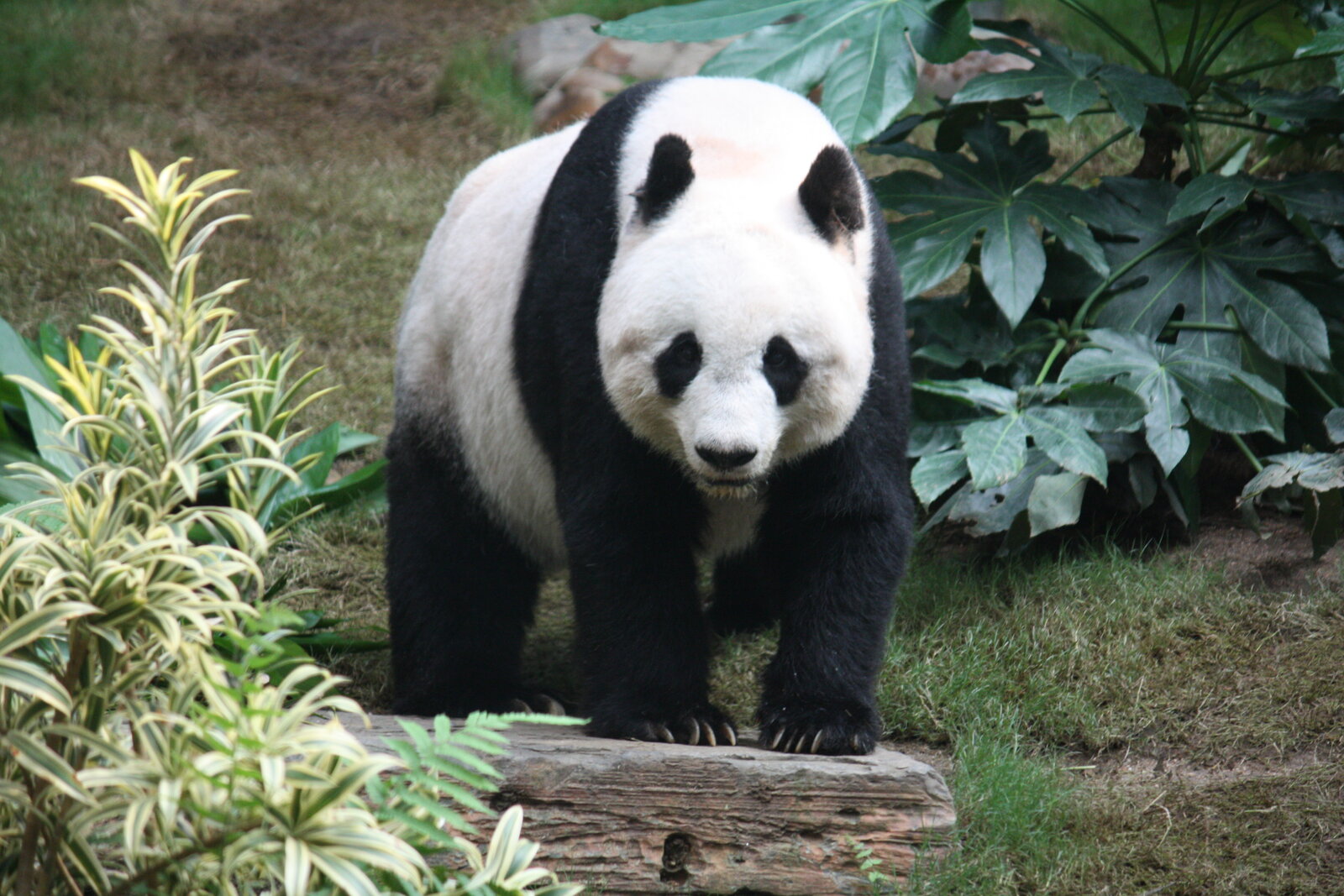 A Giant Panda enjoying its bamboo meal, a staple of its diet.
Conservation Journey: From Endangered to Vulnerable
The story of Giant Panda conservation is one of the most inspiring in the history of wildlife protection. Decades ago, habitat loss, poaching, and limited breeding success in captivity pushed the species to the brink. However, concerted efforts by the Chinese government, supported by international organizations like the WWF, led to a remarkable turnaround.
Key conservation strategies have included:
- Habitat Protection: Establishing extensive nature reserves, such as the Wolong National Nature Reserve, to protect and expand their natural habitats.
- Breeding Programs: Successful captive breeding programs in China and partner zoos worldwide have significantly increased the panda population.
- Reintroduction Efforts: Gradual reintroduction of captive-bred pandas into the wild to bolster wild populations.
- Community Engagement: Working with local communities to reduce human-wildlife conflict and promote sustainable practices.
These efforts culminated in 2016 when the IUCN (International Union for Conservation of Nature) reclassified the Giant Panda from "Endangered" to "Vulnerable," a monumental achievement that demonstrates the power of sustained conservation action [1].
Giant Pandas Around the World: Diplomacy and Conservation
Beyond China's borders, Giant Pandas serve as powerful ambassadors, fostering international goodwill and promoting global conservation awareness. Through a program often referred to as "Panda Diplomacy," China loans pandas to zoos around the world, typically for a 10-year period, with the understanding that any cubs born abroad belong to China.
As of March 2026, Giant Pandas are housed in 20 zoos and parks across 16 countries and 3 areas outside mainland China [3]. These international partnerships are not merely symbolic; they facilitate crucial research, contribute to breeding programs, and raise significant funds for in-situ conservation efforts in China.
Giant Pandas in the United States
The United States has a long history of hosting Giant Pandas, with several zoos playing a pivotal role in their conservation. As of early 2026, new agreements have been made to continue this legacy:
| City, State | Zoo | Pandas Present (as of early 2026) | Notes |
|---|---|---|---|
| Washington D.C. | Smithsonian National Zoo | Bao Li, Qing Bao | New 10-year contract signed in 2024 [4] [6] |
| San Diego, CA | San Diego Zoo | Two new pandas (names pending) | New 10-year contract signed in 2024 [4] |
| Atlanta, GA | Zoo Atlanta | Ping Ping, Fu Shuang | New pandas arriving as part of international conservation effort [5] |
These institutions provide state-of-the-art habitats, conduct extensive research on panda behavior and reproduction, and educate millions of visitors annually about the importance of wildlife conservation.
Giant Pandas in Europe
Europe also plays a significant role in Giant Panda conservation, with several countries hosting these beloved bears. As of March 2026, European zoos with Giant Pandas include [3]:
| Country | City | Zoo | Notes |
|---|---|---|---|
| Austria | Vienna | Tiergarten Schönbrunn | |
| Belgium | Pairi Daiza | Pairi Daiza | |
| Denmark | Copenhagen | Copenhagen Zoo | |
| Finland | Ähtäri | Ähtäri Zoo | |
| France | Saint-Aignan-sur-Cher | ZooParc de Beauval | |
| Germany | Berlin | Berlin Zoo | |
| Netherlands | Rhenen | Ouwehands Dierenpark | |
| Spain | Madrid | Zoo Aquarium Madrid | |
| United Kingdom | Edinburgh | Edinburgh Zoo | (Note: Pandas at Edinburgh Zoo may have returned to China by early 2026, check latest updates) |
These European zoos contribute to the global breeding program and serve as vital centers for public awareness and education, highlighting the interconnectedness of conservation efforts worldwide.
The Future of Panda Conservation
While the Giant Panda's conservation status has improved, the work is far from over. Ongoing challenges include habitat fragmentation due to human development, climate change impacts on bamboo forests, and the need for continued genetic diversity in breeding programs. Future efforts will focus on:
- Corridor Creation: Connecting fragmented habitats to allow for greater genetic exchange among wild populations.
- Climate Change Adaptation: Researching and implementing strategies to mitigate the effects of climate change on bamboo growth and panda habitats.
- Sustainable Development: Working with local communities to promote sustainable livelihoods that do not encroach upon panda habitats.
- Technological Advancement: Utilizing drones, AI, and other technologies for more effective monitoring and anti-poaching efforts.
The Giant Panda remains a beacon of hope, demonstrating that with concerted global effort, even the most endangered species can be brought back from the brink. Protecting their habitat also protects numerous other species that share the same ecosystem. Their charismatic appeal also helps raise global awareness and funding for broader conservation efforts.
FAQ
Q: How many Giant Pandas are left in the wild? A: While exact numbers fluctuate, the wild population is estimated to be around 1,864 individuals, with a total global population (wild and captive) exceeding 2,000 [1].
Q: Why are Giant Pandas so important to conservation? A: As an "umbrella species," protecting Giant Pandas and their habitat indirectly protects many other species that share the same ecosystem. Their global appeal also draws significant attention and funding to broader conservation issues.
Q: What is "Panda Diplomacy"? A: Panda Diplomacy refers to China's practice of loaning Giant Pandas to foreign zoos as a gesture of goodwill and to foster international relations. These loans also support conservation research and breeding programs.
Q: Can I see Giant Pandas in the wild? A: While challenging, it is possible to see Giant Pandas in the wild through specialized eco-tours in reserves like Wolong, Sichuan. These tours are often led by expert guides and prioritize minimal disturbance to the animals.
References
[1] WWF-UK. (2025). Panda conservation - A lasting legacy. Retrieved from https://www.wwf.org.uk/success-stories/panda-conservation-lasting-legacy [2] National Geographic. (n.d.). Giant Panda. Retrieved from https://www.nationalgeographic.com/animals/mammals/facts/giant-panda [3] Wikipedia. (2026). Giant pandas around the world. Retrieved from https://en.wikipedia.org/wiki/Giant_pandas_around_the_world [4] Reddit. (2024). Here's a list of zoos in the U.S. that currently have giant pandas. Retrieved from https://www.reddit.com/r/KingOfTheHill/comments/1jzoehr/heres_a_list_of_zoos_in_the_us-that-currently/ [5] People. (2026). New Giant Pandas are Moving to the U.S., See Which Zoos Will Host Them. Retrieved from https://people.com/china-to-send-new-giant-pandas-to-us-zoo-11958068 [6] Smithsonian Magazine. (2025). See the National Zoo's 2025 Giant Panda Photos. Retrieved from https://www.smithsonianmag.com/smithsonian-institution/see-14-of-the-national-zoos-most-adorable-giant-panda-photos-from-2025-180987860/ [7] Wikimedia Commons. (2009). File:Grosser_Panda.JPG (J. Patrick Fischer; CC BY-SA 3.0). Lead image is a resized derivative. https://commons.wikimedia.org/wiki/File:Grosser_Panda.JPG