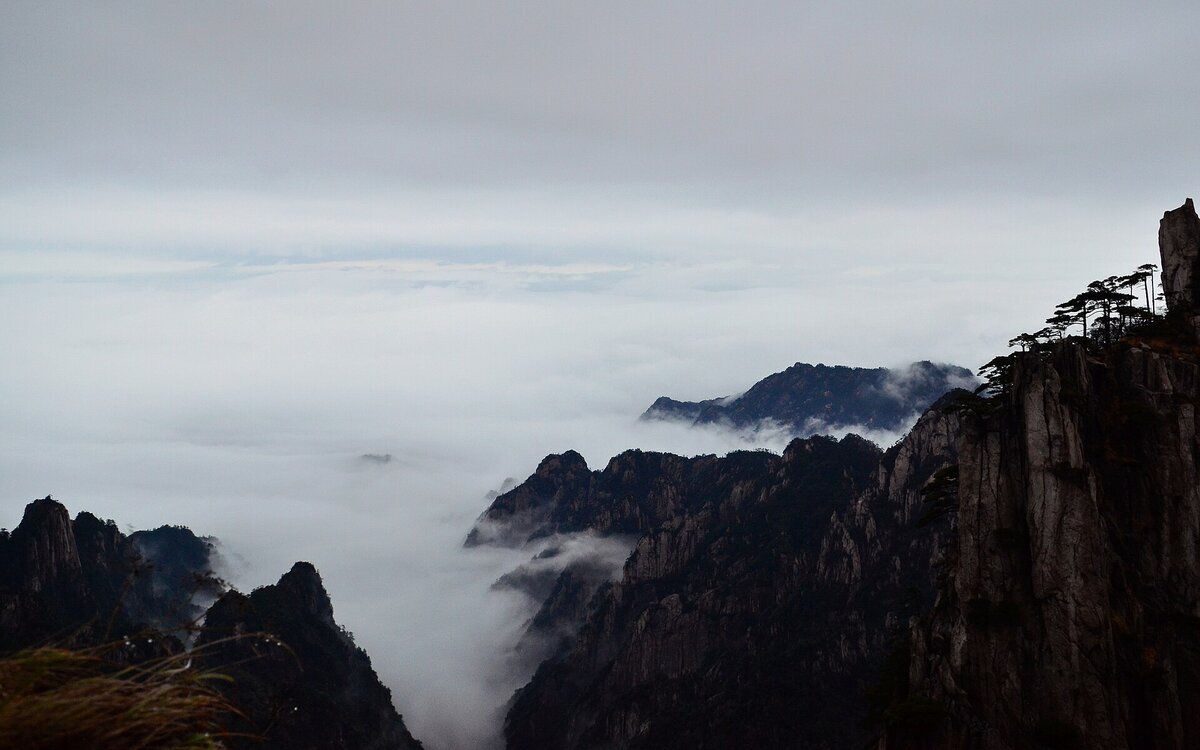
Hey Deep Divers! Eddie here, your Guilin local with a global soul. When travelers picture China’s mountains, they often reach for Huangshan sunrises or Tai’s steps. But there is another lineage — peaks with a hermit’s soul. The sacred Taoist mountains are spiritual coordinates where nature, palace architecture, and old philosophy collide. From Wudang’s taiji world to Qingcheng’s green silence, this is how harmony with nature stops being a slogan and becomes something you breathe.
Library cross-reads
Same rule: context before mileage
Read alongside our Chinese Natural History primer and China’s Mountains 101 — Mount Qingcheng (5 days) when you want runnable Sichuan forest days with altitude manners.
Introduction: Seeking the “Way” in the Misty Peaks
These aren’t only rocks and trees; they are places where the Way (Dao) feels legible on a switchback. I’ve spent years on these slopes — from Wudang’s taiji courtyards to grotto-heavens tucked behind ticket booths you almost miss. Welcome to the world of the Immortals — in the Chinese sense: not escapism, but disciplined presence.
Eddie’s Picks: Choosing Your Taoist Adventure
| If you want… | Go to… | Why Eddie loves it |
|---|---|---|
| Grandeur & history | Mount Wudang | Ming imperial scale above the fog. |
| River vistas & mystery | Mount Longhu | Luxi drift past red cliffs and old stories. |
| Quiet contemplation | Mount Qingcheng | Serenity that feels earned, not staged. |
| Village vibe & red cliffs | Mount Qiyun | Huizhou texture in the sky lanes. |
What Makes a Mountain “Taoist”? More Than Just Temples
In Taoist thought, a mountain is a living entity where heaven-and-earth qi gathers — a field for cultivation, immortal legends, and honest fatigue. UNESCO framing on Wudang and Qingcheng underscores how architecture anchors practice in stone and forest.
A site hardens into a Taoist sacred geography through:
- Faith positioning — ties to specific lineages or deities (Zhenwu at Wudang, for example).
- Spatial construction — palaces, grotto-heavens (dongtian), and old paths choreograph attention.
- Continuous use — centuries of monastics, pilgrims, and townspeople sharing the same slope economy.
The Big Four: A Map of Spirit and Scenery
- Mount Qiyun (Anhui) — “Small Wudang of the South,” Danxia reds, cloud streets, Huizhou roofs on the ridge.
- Mount Wudang (Hubei) — taiji lore and Ming palace complexes, UNESCO-listed building art in the mist. [2]
- Mount Longhu (Jiangxi) — Zhengyi ancestral landscape: red cliffs, green water, hanging-coffin echoes in story. [3]
- Mount Qingcheng (Sichuan) — “Most serene under heaven,” forests swallowing ancient halls near Dujiangyan’s hydraulic genius. [4]
Four Mountains, Four Spirits: Harmony, Tai Chi, Orthodoxy, and Serenity
| Mountain | Spirit keyword | Core vibe |
|---|---|---|
| Qiyun | Harmony (zhonghe) | Danxia cliffs meet Huizhou village life. |
| Wudang | Tai chi | Imperial grandeur meets internal arts. |
| Longhu | Orthodoxy (Zhengyi) | Institutional history on a river stage. |
| Qingcheng | Serenity (qingyou) | Deep forest, wu wei tempo. |
The Three Masterpieces: Palaces, Grotto-Heavens, and Landscapes
On any serious visit, thread three scales:
- Palaces (gongguan) — Golden Hall grammar at Wudang; Celestial Master’s Mansion weight at Longhu.
- Grotto-heavens (dongtian) — not “just caves,” but portals in story — True Immortal grottoes at Qiyun; Celestial Master’s Cave at Qingcheng.
- Landforms as text — Longhu’s red beds, Qingcheng’s green corridors, Qiyun incense peaks.
Life at the Foothills: Incense, Kung Fu, and Taoist Medicine
- Kung fu & tai chi — especially Wudang, where public practice is part of the town’s clock.
- Medicine & tea — high herbs and mountain tea; ask what is in season before you buy a gift tin.
- Ancient towns — Yuehua Street moods on Qiyun — monks, shopkeepers, and hikers sharing one narrow sky.
FAQ: Navigating the World of the Immortals
Q: Do I need to be Taoist to visit?
A: Not at all. Hikers, historians, and the quietly curious are welcome.
Q: Is the hiking difficult?
A: It varies. Wudang and Qingcheng back routes can bite; cableways exist on many flagship circuits.
Q: How should I behave in a Taoist temple?
A: Quiet feet, no altar touching, ask before interior photos.
Q: Best season?
A: Spring and autumn for mist drama without summer crush.
References: Dive Deeper into the Research
- Wikipedia. Mount Qiyun. en.wikipedia.org
- UNESCO. Ancient Building Complex in the Wudang Mountains. whc.unesco.org
- UNESCO. China Danxia (includes Longhushan). whc.unesco.org
- UNESCO. Mount Qingcheng and the Dujiangyan Irrigation System. whc.unesco.org
- Personal experience. Eddie’s travels to Wudang, Qingcheng, and Qiyun. (2024).
- Travel China Guide. Wudang Mountains travel guide. travelchinaguide.com
- Travel China Guide. Mount Qingcheng. travelchinaguide.com
- Travel China Guide. Taoism in China. travelchinaguide.com
Ready to find your own Way? DM me to start your Deep Dive today!