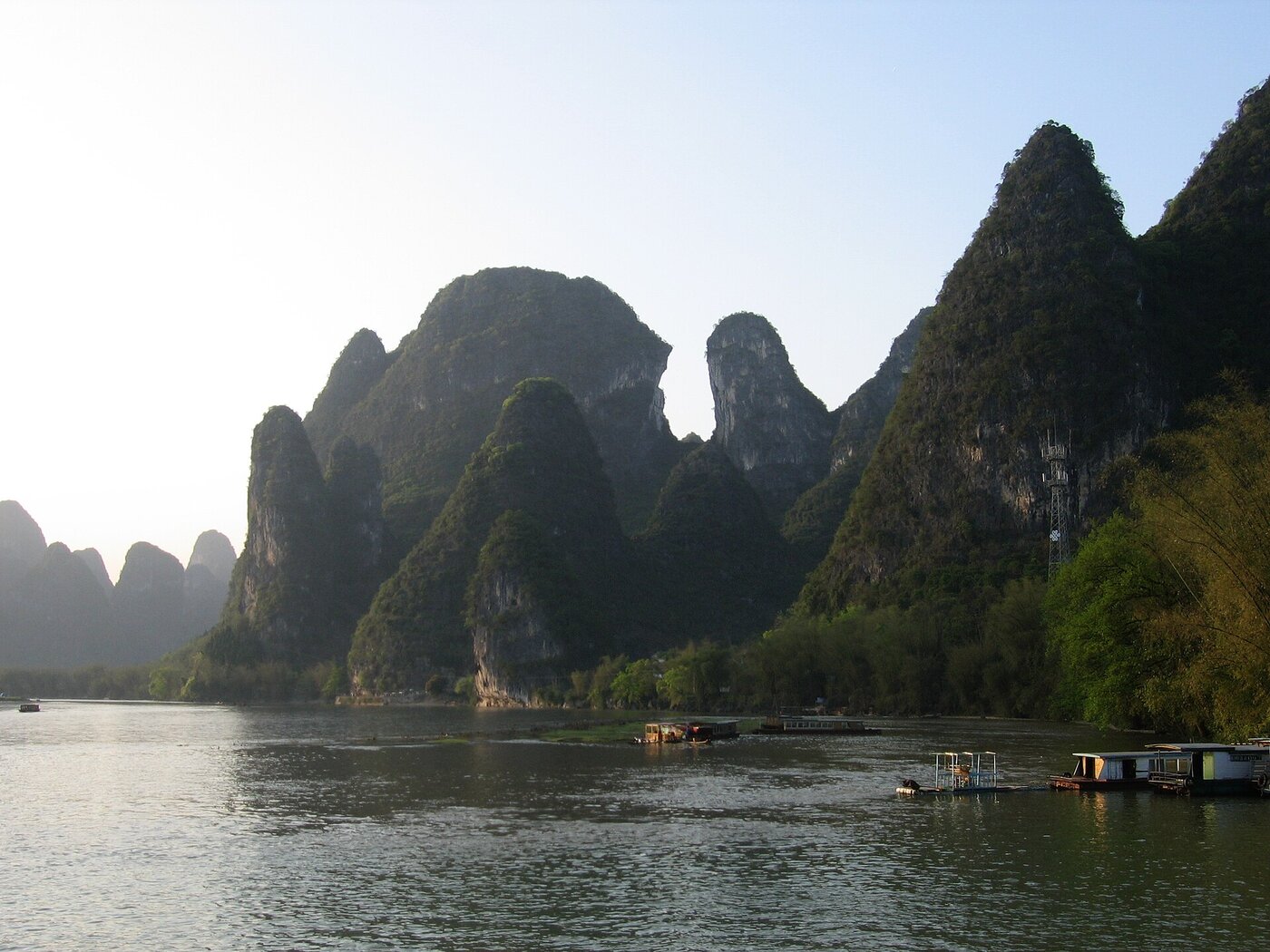
World War II pushed 250+ Chinese artists into Guilin — Xu Beihong, Zhang Daqian, Fu Baoshi, Guan Shanyue — trading Shanghai concrete for bamboo rafts. Growing up here, those names felt like secret topography under the tourist map.
When Guilin became a sanctuary
Limestone caves doubled as air-raid shelters for people and scrolls. Artists tested how modern crisis met classical brush codes — proof that Guilin scenery symbolized resilience, not escapism.
Masters and traces
| Artist | Guilin link | Sketch compass |
|---|---|---|
| Xu Beihong | Yangshuo residence | Panshan Park, West Street |
| Zhang Daqian | Li River salons | Xingping bend |
| Fu Baoshi | Baoshi texture experiments | City karst overlooks |
| Guan Shanyue | Hundred Miles of Li River | Full downstream raft |
Zhang Daqian’s later splash-ink owes part of its courage to Li corridor debates; Fu Baoshi’s textured mountains absorb Guilin humidity in the brush.
Paint like a master today
- Xingping for the RMB 20 bend light.
- Yangshuo Ten-Mile Gallery for buffalo-and-bamboo pastoral.
- Panshan Park for quiet urban green.
- Guilin–Yangshuo float for sequential scale shifts.
Legacy
International artists now join local bases to “time-travel” with ink or oil. Guilin isn’t wallpaper — it is a living museum where standing with a brush continues a lineage.
FAQ
Xu residence access?
Yangshuo memorial site; confirm opening days.
English art guides?
Growing; message us for vetted partners.
Best season?
September–November for crisp air; spring for mist.
References
- History of the Wartime Cultural Movement in Guilin (Lijiang Publishing House).
- Xu Beihong in Guangxi (Guangxi Daily archives).
- Zhang Daqian Research Center notes on Guilin travels.