Hey Explorers! I’m Eddie, a Guilin native with a “Global Soul, Local Heart.” Guangxi is where I grew up for eighteen years — not only Li River postcards, but a braid of minority homelands I first learned through classmates, holidays, and kitchen tables.
Editor’s Picks: Eddie’s Must-See Guangxi Checklist
| Destination | Highlight | Why Eddie recommends it |
|---|---|---|
| Longji Rice Terraces | Terraced landscapes, Yao and Zhuang villages | Agricultural wisdom plus hiking rhythm in one frame. |
| Longsheng Multi-Ethnic Autonomous County | Red Yao long hair village, crafts | Living tradition, not costume theatre. |
| Gongcheng Yao Autonomous County | Oil tea, persimmon culture | Savory tea tables that decode Yao hospitality. |
| Guilin | Karst, Li River | My hometown base camp before you branch into minority counties. |
Introduction: My Guangxi, My Home
This isn’t only Guilin’s world-famous karst; it’s where dozens of ethnic threads overlap — Zhuang, Yao, Miao, Dong, and more — and where I try to be a cultural translator for friends who want the Guangxi that doesn’t live in a brochure.
Childhood Memories: Yao and Zhuang Classmates
In high school my class held Yao friends from Longsheng, Gongcheng, and Zhuang brothers and sisters who invited me home each holiday. In Longsheng I first saw Red Yao women’s long hair as living lineage, not a prop [1]. In Gongcheng I tasted oil tea — savory, warming, unforgettable [2]. Those kitchens taught me more than any lecture about “diversity.”
Immersive Experiences
True travel, for me, is village tempo: working beside hosts, eating their table, hearing folk songs, joining festivals when invited. That is the Eddie-style deep dive Deep Dive China builds toward — permission-based, low-interference, high-context.
Natural Treasures: Longji Rice Terraces
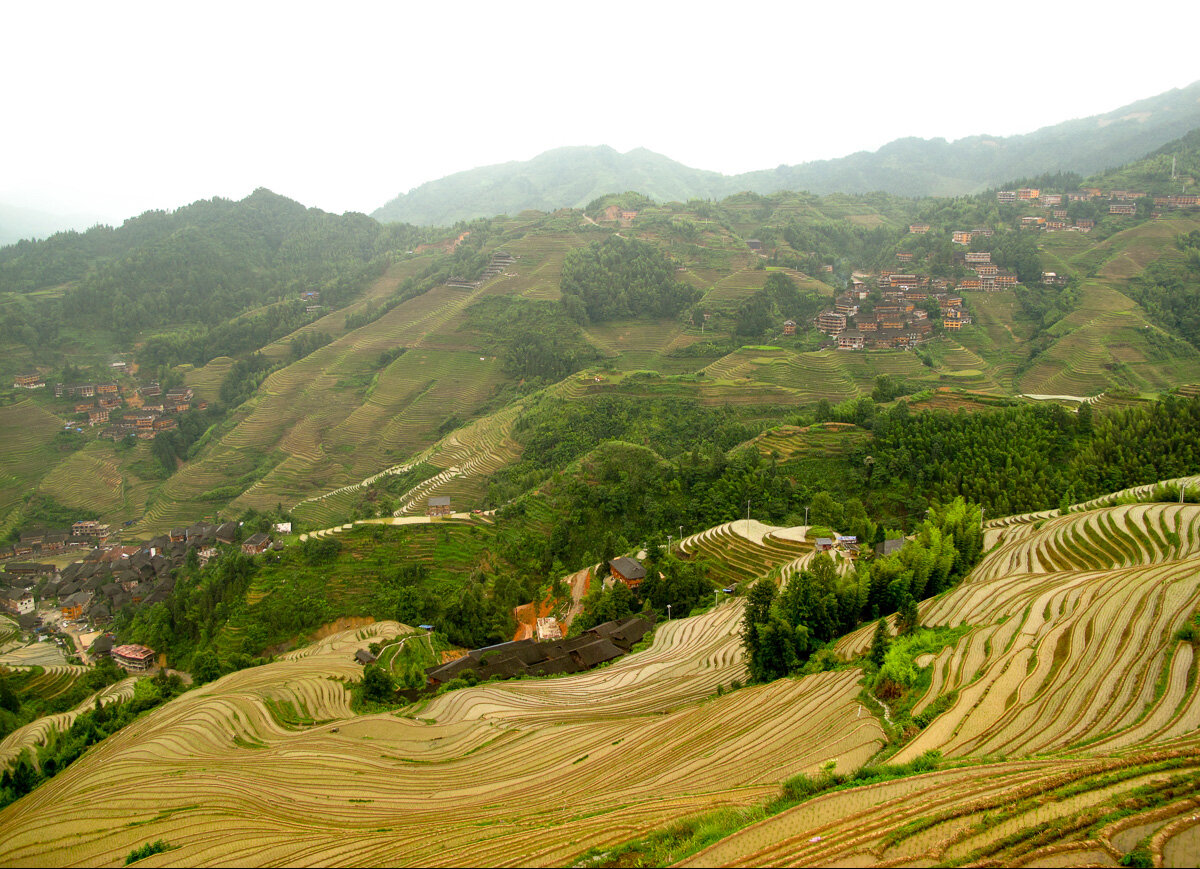
Longji (“Dragon’s Backbone”) is where curve meets labor — irrigation mirrors in spring, green tiers in summer, gold in autumn [3]. Every contour carries Zhuang and Yao care; you feel why UNESCO-grade landscapes still need living communities to steward them.
Cultural Heritage: Yao and Zhuang
From Red Yao Cloth Drying Festival color to Zhuang gehui, bronze drums, and brocade, these are living grammars — not museum labels [4].
Frequently Asked Questions
Q: Main minorities in Guangxi?
A: Zhuang (largest), Yao, Miao, Dong, Mulao, Maonan, Hui, Jing, Yi, Shui, Gelao, and more — twelve indigenous groups are commonly counted in provincial framing.
Q: Best time for Longji?
A: Year-round beauty; irrigation (April–May) and golden harvest (September–October) are peak photography and trekking windows.
Q: Gongcheng oil tea?
A: Savory brew with tea, peanuts, corn, ginger, garlic — warming and social; always accept a cup when offered.
References
- People’s Daily Online. Where long hair tells a story: Red Yao women and their living tradition. (2025). en.people.cn
- Xinhua. Oil tea of Yao ethnic group. (2024). english.news.cn
- The China Guide. Longji Rice Terraces. thechinaguide.com
- Visit Our China. Cloth Drying Festival of Yao People in Longsheng. (2010). visitourchina.com
- Wikimedia Commons. Longji Rice Terraces 004 (Rutger van der Maar; CC BY 2.0). commons.wikimedia.org
